Showing posts with label technology. Show all posts

Saturday, September 21, 2024

John J. Berger''s new climate book: A comprehensive approach to saving the planet

 The top-of-mind responses to the climate crisis tend to be few and simple.

Use less fossil fuel and switch transportation to electric vehicles, restore forests, recycle, eat less meat.

But a serious response requires a broad rethinking of everything about how we live on the planet. And that’s complex.

John J. Berger’s new book runs through a lot of the approaches that are already underway and makes recommendations for how to proceed. The book is Solving the Climate Crisis: Frontline Reports from the Race to Save the Earth.

Berger is the author of Climate Myths, Beating the Heat, Forests Forever and more. He is a noted environmental writer and climate policy expert, and in his latest book he conducts a comprehensive review of strategies to address our warming climate.

Some possible solutions are underway right now or at least starting. Manufacturing steel that doesn’t depend on massive fossil fuel inputs. Replacing oil-based products with ones made from plants. Electric and fuel cell aircraft.

There’s green concrete, new approaches to recycling, buildings that produce more power than they use, hydrogen cargo trucks and so much more.

There are examples of farmers who have turned problematic fossil-fuel-reliant businesses into thriving green enterprises that restore the soil and entrain carbon. He outlines the benefits of saving and expanding forests.

He reviews some of the geoengineering approaches, like sucking carbon out of the atmosphere, and seeding the skies with compounds that reflect solar radiation.

He takes a realistic look at the issues associated with decarbonizing planet-wide.

There’s clearly lots to be done at the legal, policy and international affairs levels, Berger writes. His to-do list starts with a national recognition that we are in an emergency, and that we need a National Clean Energy Transition Plan.

But it would all be so very costly, right? Maybe not.

“Various studies have found that a clean-energy transition would cost no more than 2 percent of gross domestic product in the United States,” Berger writes. He says he worries about the accuracy of those estimates, but even so, “that’s a pretty good deal, given all the other economic, environmental, and health benefits the United States would also receive.”

Berger’s book is a little overwhelming in its scope, but it’s well-written and anyone interested in how we need to approach this crisis will find lots to chew on. That, and some hope. It may be complicated, but it's possible, is Berger's message.

It does occur to me that, given the topic of the book, an actionable strategy for Berger would have been making the ebook dramatically less expensive than a paper copy of the book, but it’s close to $20 for the electronic version. Here, here, here and here are a some ways to find Solving the Climate Crisis.

© Jan TenBruggencate 2024

Saturday, June 22, 2024

Stone adzes traveled widely, perhaps as a lubricant for Polynesian trade networks


How valuable was high-quality stone in a stone-age culture?

So important that the valuable stone found its way long distances from home.

This isn’t news to the archaeological community. It has found a Kaho`olawe-sourced basalt adz in the Tuamotu Islands. Mauna Kea adz quarry stone tools in the Marquesas. Marquesan Eiao Island adzes throughout what is now French Polynesia. The longest adz in the Bishop Museum’s collection was found in the ocean off O’ahu, but came from the Pu‘u Pāpa‘i quarry on Molokai.

Quality stone tools traveled. Maybe as trade items. Maybe a gifts between chiefs. Maybe because a stone tool from afar had a special prestige, or a mana, a perceived spiritual power.

They were part of what archaeologists call “interaction networks” between the spread-out islands across the Pacific.

The Museum of Stone Tools has some adz images here. 

Most volcanic islands had at least some good quality stone, although the quality varied. New Zealand and Australian researchers Christopher Jennings, Marshall Weisler and Richard Walter last year in the journal Archaeology in Oceania published a comprehensive report on stone quarries across the Pacific. It is entitled, “An archaeological review of Polynesian adze quarries and sources.”

They argue that stone tools were more than just useful implements, but a significant part of cultural activity in Polynesia. They hold that “the adze industry played a much more significant and complex role in Polynesian cultural history than is currently realized.”

Early Pacific residents could make tools from readily available sources near home, but if they found exemplary qualities in remote sites, they would go to great lengths to get that material—such as quarrying in the frigid heights of Mauna Kea, or an isolated island like Eiao.

Adzes, they say, were “the most distantly exchanged items in the Neolithic world.”

But why? “We can establish a relationship between large scale quarry production, fine grained stone, highly skilled flaking technology and long-distance exchange, but we still do not know what drove these associations,” they wrote.

A good quarry would be used continuously over long periods of time. The Pu‘u Pāpa‘i quarry on Molokai is one of the oldest in Hawai’i, perhaps because it had high quality stone and was near an early settlement site at Kawela.

Researchers Marshall I. Weisler, John Sinton, Quan Hua, and Jane Skippington reviewed that quarry in the Journal of Pacific Archaeology, a 2024 paper with the ponderous title, “Indirectly Dating one of the Oldest Adze Quarries in the Hawaiian Islands Provides Insights into the Colonisation Process and Community Network.”

Adzes made from stone at this specific Molokai quarry are readily identified because it the unique chemical characteristics, high in strontium and phosphate. The unique chemical makeup of quarry stones is how adzes are sometimes linked to their home islands.

One suggestion from a lot of recent work is that adzes were a key component of exchange networks. It is not clear whether adzes were a lubricant that facilitated trade between distant islands, or whether voyaging canoes were simply early Snap-On tool trucks, hauling quality tools to customers.

One thing that seems clear is that hauling valuables between island was a long-standing practice in the Pacific. It dates back at least to the Lapita culture of thousands of years ago, according to paper from May 2024 by Nicholas W. S. Hogg, Scarlett Chiu, Patrick V. Kirch and Glenn R. Summerhayes. 

That paper, in Archeology in Oceania, reviews early exchange networks involving adzes and pottery in the Lapita era of far western Polynesia.

© Jan TenBruggencate 2024

Thursday, June 20, 2024

Are we seeing more flight turbulence, and is it linked to climate change? Yes and yes.

 We have seen numerous reports of airliners suddenly plunging hundreds or thousands of feet midflight.

And a fair amount of suggestion that atmospheric turbulence is the cause, along with some guesswork that turbulence is increasing due to climate change.

Could that be true? The answer seems to be, yes.

There does seem to be a fair amount of turbulence-related airline drama this year. Here is a review of one kind, clear-air turbulence. 

There is also thunderstorm-related turbulence, and other kinds.

In February 10, 2024, a United flight experienced “moderate turbulence” between Newark and Los Angeles. Several passengers were injured.  

On May 20, a Singapore Airlines flight experienced severe turbulence over Myanmar, which caused significant injury.

Also in May, a Qatar Airways flight between Dohar and Dublin was knocked around, apparently by turbulence May 26. 

To be clear, a review of many recent incidents of bumpy plane rides suggests that a lot of them have little or nothing to do with climate or turbulence.

An April 11, 2024, Southwest flight had a sudden drop while approaching Lihue Airport, leveling off at about 400 feet above the ocean. That, investigators said, was due to mistake at the controls by a pilot.

In a Latam Airlines incident in March 2024, a plane apparently went into a dive when the cockpit crew briefly lost control of the aircraft. The pilots brought the plane back into control. Latam called it a “a technical event during the flight which caused a strong movement.”

A 2022 United flight event involving a sudden drop was determined to be pilot error, according to the National Transportation Safety Board. 

In 2019, Psychology Today published an article about a Delta flight, on the fear generated by these kinds of events. 

In that case, the incident was a controlled descent apparently associated with a cabin pressurization event. The article decries media sensationalizing and mischaracterization.

But there are plenty of occasions when actual turbulence, rather than equipment or human error, are involved.

Hawaiian Airlines had such an incident in December 2022, 65 miles north of Maui. The National Transportation Safety Board report said, “A cloud shot up vertically (like a smoke plume) in front of the airplane in a matter of seconds, and there was not enough time to deviate.”  

No previous flights in the area that day had reported turbulence, but the NTSB report said: “Postaccident examination of the weather in the area revealed that there was an occluded frontal system with an associated upper-level trough moving towards the Hawaiian Islands. Satellite and weather radar imagery, and lightning data depicted strong cells in the vicinity of the flight.”

An article in Smithsonian Magazine argues that climate change may be causing increases in turbulence, and therefore in aircraft-involved incidents. 

U.S. Secretary of Transportation Pete Buttigieg in May said turbulence is increasing, and that climate change is a big factor. The Smithsonian article said that technology is also improving, and will help moderate risk, but that bumpier flights may be in our future.

Many of the injuries in such incidents involve people being thrown around the aircraft. It’s a reminder to keep those seat belts fastened.

© Jan TenBruggencate 2024

Tuesday, March 21, 2023

I guess it's possible to be optimistic about the new IPCC report, and some are. I'm not.

The newest United Nations report on planetary climate, different from previous cautious reports, minces few words. 

Things are getting worse, and faster than ever, and we have no time left to act. Paraphrasing Yoda, it's time to do something; simply trying is not an option.

“The report is a full-throated call for the massive—yet doable—changes our species must enact to limit the damage that comes with each fraction of a degree of warming,” said Wired, the online magazine. 

There is now more carbon dioxide in the atmosphere, 410 parts per million, than in the past 2 million years—that’s before there were humans on our planet. No other period in the past 2,000 years has seen climate warming as fast as in the past 50 years.

The impacts of these changes have been seriously inequitable. The Intergovernmental Panel on Climate Change 2023 report says the people least responsible for the change are suffering the most.

“Widespread and rapid changes in the atmosphere, ocean, cryosphere and biosphere have occurred. Human-caused climate change is already affecting many weather and climate extremes in every region across the globe. This has led to widespread adverse impacts and related losses and damages to nature and people. Vulnerable communities who have historically contributed the least to current climate change are disproportionately affected,” the report said in its summary for policymakers.

You can find the actual report summary and various associated documents here. 

Nearly half the world’s population is vulnerable and at risk of climate change disruptions, from coastal inundation, storms, flooding, drought, food and water shortages, and related issues. That risk is playing out now, and continues to increase.

“Between 2010 and 2020, human mortality from floods, droughts and storms was 15 times higher in highly vulnerable regions, compared to regions with very low vulnerability,” the report said.

The already-observed changes include water shortages, crop failures, livestock health problems, reduced fishery yields, malnutrition, infectious diseases, community displacement, and immense impacts on ecosystems. The report cites throughout how much faith it has in its observations.

“Climate change has caused substantial damages, and increasingly irreversible losses, in terrestrial, freshwater, cryospheric, and coastal and open ocean ecosystems (high confidence). Hundreds of local losses of species have been driven by increases in the magnitude of heat extremes (high confidence) with mass mortality events recorded on land and in the ocean (very high confidence). Impacts on some ecosystems are approaching irreversibility such as the impacts of hydrological changes resulting from the retreat of glaciers, or the changes in some mountain (medium confidence) and Arctic ecosystems driven by permafrost thaw (high confidence.)”

As we move along in time, it gets worse. “Every increment of global warming will intensify multiple and concurrent hazards.”

There are two primary options: Mitigation, or doing something about it; and adaptation, or learning to live with it.

The report says we have the technology to mitigate, to turn things around. But it would take severe and dramatic action. We do not seem to be willing as a planet to do what’s necessary.

“Deep, rapid, and sustained reductions in greenhouse gas emissions would lead to a discernible slowdown in global warming within around two decades, and also to discernible changes in atmospheric composition within a few years.”

But we are not spending enough money on it, and not committing enough of our policy initiatives to it.

So what about adapting? Realistically, even with drastic action, things would get worse before the arrow of livability starts to turn upward. So some adaption will be required anyway.

Clearly the poorest among us will be hit soonest and hardest, and they will have the fewest opportunities to adapt. The wealthier communities will be able to adapt, to a degree. But increasing climate change will threaten even their adaptation options.

“Adaptation options that are feasible and effective today will become constrained and less effective with increasing global warming. With increasing global warming, losses and damages will increase and additional human and natural systems will reach adaptation limits,” the report said.

To avoid catastrophe, the report says, the world needs immediate and severe cuts in greenhouse gas emissions. To limit the worst impacts in the coming few decades, emissions need to be driven to near zero.

But policies currently in place don’t do that. If anything, they leave emissions flat, meaning the situation continues to get worse.

This is the frustration. We can do it. We must do it.  But it is not clear we will do it.

What are the odds that this particular planet can galvanize its systems to do what the IPCC says is required? Here is the IPCC’s vision:

“Effective climate action is enabled by political commitment, well-aligned multilevel governance, institutional frameworks, laws, policies and strategies and enhanced access to finance and technology. Clear goals, coordination across multiple policy domains, and inclusive governance processes facilitate effective climate action. Regulatory and economic instruments can support deep emissions reductions and climate resilience if scaled up and applied widely. Climate resilient development benefits from drawing on diverse knowledge.”

Lots of media reports—ignoring the essence of the report—are all about the upside: “We can fix this! Yes, we can!”

The Christian Science Monitor takes the middle path, noting that the IPCC “walks a fine line between desperation and hope in an effort to spur a more forceful global response.”

Some publications get lost in the weeds. CNBC decided to focus on reflecting the sun's light and heat back into space. Others wondered whether carbon capture technology is ready for prime time.  

All the while ignoring the elephant in the room--we need to stop burning oil and coal.

So, the thinking goes, maybe we can do these interesting techie things, and keep on burning coal in power plants and gasoline in our big luxury cars. And everything will be just fine.

That, of course, is dithering. And while dithering, perhaps we can ponder this: 

How much misery are we willing to subject our grandchildren and their grandchildren to, to keep living the way we are living?

© Jan TenBruggencate 2023 
Wednesday, February 22, 2023

Wrapping up the shot-down balloons story: Yes, balloons can crash planes

 We may not learn a whole lot more about the four objects shot down during February 2023 by American jets, other than they appeared to all be balloons carrying some sort of payload.

The first was a Chinese-owned giant balloon that drifted across North America from Alaska to North Carolina, where it was shot down February 4 after it passed the coast into the Atlantic. As best we know, it had surveillance equipment on board, multiple antennas, and presumably the capacity to track and report on U.S. communications. 

U.S. intelligence agencies tracked it from takeoff in south China, all the way to its downing off the Carolinas. We assume that we were able to gather significant intelligence from it while it operated, and more after most of it was recovered from the Atlantic. 

Three more balloons were shot down over the coastal ice in Alaska February 10, the forests of the Yukon in Canada February 11 and over the waters of Lake Huron February 12.

News reports indicate all three of them were most likely very small “pico balloons,” which are much smaller than the Chinese balloon, hard to track on radar, and which normally carry miniature payloads. One standard for these balloons is to carry transceivers that allow ham radio operators to communicate with them, or to transmit messages to them to be retransmitted to other radio operators.

None of the three small balloons was recovered, but an Illinois radio and balloon hobbyist group said the Canadian object was probably theirs.

The Northern Illinois Bottlecap Balloon Brigade said it might have been one of their mylar balloons, with the call sign K9Y0. It had been up for half a year, and had circled the globe nearly seven times. They don’t know for sure that the Yukon object, but they said it stopped transmitting about the time of the reported destruction of an object by a U.S. Fighter’s rocket. Aviation Week reported on it here. 

There may be dozens of similar balloons orbiting our planet at any time, on top of the weather balloons, corporate spy balloons, hot air balloons, party balloons, and nations’ spy balloons. In all, this Scientific American article says there may be hundreds to thousands up over the U.S. at any given time. 

Some have radio transponders so aircraft can detect them, some are reflective so they show up clearly on radar, but some are ghostly hard to detect, yet still dangerous to an aircraft that might suck one into its engine or around its control surfaces.

While plane-balloon interactions are rare, they have occurred. Most result in only minor damage to the plane, as when this Air Canada flight took out a weather balloon in 2019. https://simpleflying.com/air-canada-weather-ballon-collision.

But some have caused crashes.

Forty-five people were killed in a 1970s Russian crash after a propellor plane hit a weather balloon. 

In California in 1994, a twin-engine Piper Comanche went down, killing its pilot, after it apparently hit party balloons. 

In 2007 a Cessna lost a wing after hitting the tether line for an inflatable airship. 

And there are near misses, as when this Qatar Airlines Boeing jet managed to dodge a large balloon over Brazil last year. 

© Jan TenBruggencate 2023

Monday, February 13, 2023

Maybe alien, maybe not balloons, speculation rampant about the mysterious shot down objects

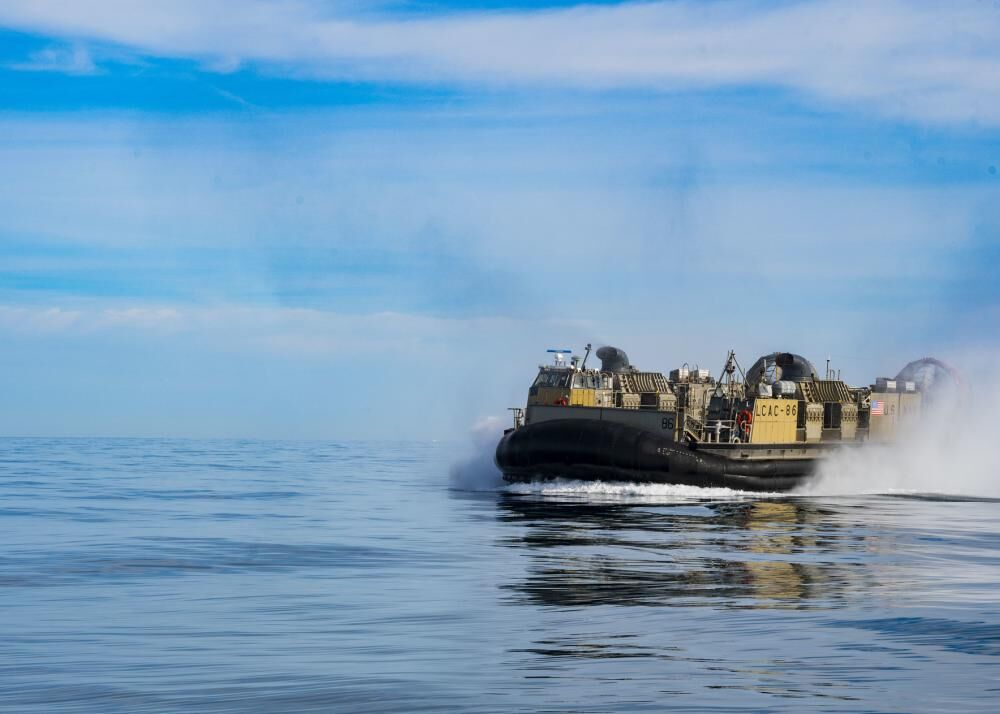
 (Image: U.S. Navy assault craft working on the recovery of debris from the Chinese balloon shot down over South Carolina February 4. Credit: U.S. Navy.)


Everything about the mystery objects we’ve been shooting down remains in limbo—partly because we and the Canadians have not completed operations to recover them.

Some American officials say it’s a step too far to suggest they are alien craft from extraterrestrial sources. Others won’t rule that out.

But we won’t have clear indications until we can actually inspect the wreckage. Until then, it’s all Area 51-type speculation.

Much of the February 4 Chinese balloon debris is still reportedly off South Carolina in 50 feet of water. The item shot down February 10 over Alaskan sea ice hasn’t been recovered because of harsh Arctic winter weather. The Royal Canadian Mounted Police are working to get at the debris of the February 11 shoot-down in wild country in the Yukon. And American forces are still trying to get at the debris of the February 12 object, which reportedly fell into Lake Huron in the American/Canadian Great Lakes.

Increasingly, descriptions of these devices are bizarre. One thing that seems clear is that they are very different. Early reports suggest they might not even all be balloons, although that’s what Senate Majority Leader Charles Schumer believes they are, according to a Los Angeles Times report.  

They are clearly different things. They fly differently. They look different.

The Chinese balloon drifted at 60,000 feet. The Alaskan and Yukon objects at 40,000 feet, and the Lake Huron object at 20,000 feet.

Descriptions vary. The Chinese balloon appeared spherical and as big as three buses. The Alaskan balloon was the size of a small car. The Yukon object was cylindrical. The Lake Huron object octagonal with strings hanging down.

In descriptions, caution has sometimes veered into the implausible, as when Gen. Glen D. VanHerck, the commander of the Air Force’s Northern Command, was asked if they might be from outside our planet. He said, “I haven’t ruled out anything at this point.” Other Administration officials said there’s no indication of anything from outside the Earth being involved.

It makes the most sense that these would all be lighter-than-air balloons of some kind, but VanHerck in a CNN story said, essentially, not so fast.

"I'm not going to categorise them as balloons. We're calling them objects for a reason… What we are seeing is very, very small objects that produce a very, very low radar cross-section," he said. 

In a CNN report, the government also expressed caution about assuming the Alaskan, Canadian and Great Lakes objects are balloons: "These objects did not closely resemble, and were much smaller than, the [4 February] balloon and we will not definitively characterise them until we can recover the debris," CNN reported, citing a White House National Security spokesperson. 

So, what? Drones? If so, how can they stay aloft for periods long enough to be drifting slowly over hours and days?

China sought to put some perspective into the discussions, saying the United States does a lot of its own balloon work. In an Associated Press article, Wang Wenbin, an official of China’s foreign ministry, said “It is also common for U.S. balloons to illegally enter the airspace of other countries… Since last year, U.S. high-altitude balloons have illegally flown over China’s airspace more than 10 times without the approval of Chinese authorities.”

That suggests the possibility that some of the high altitude objects we’re seeing could be our own vehicles, perhaps drifting post-mission.

But the one thing we know is that the Chinese balloon downed off South Carolina was Chinese, as China has confirmed that. And initial indications are that there was American technology in its electronics package. And in response to that, the U.S. has prevented six Chinese aerospace firms from using American technology without U.S. approval.

In a Washington Post report, the White House suggested China continues to downplay its own actual intrusions into the airspace of other nations.

“This is the latest example of China scrambling to do damage control. It has repeatedly and wrongly claimed the surveillance balloon it sent over the United States was a weather balloon and to this day has failed to offer any credible explanations for its intrusion into our airspace and the airspace of others,” said White House spokeswoman Adrienne Watson. 

China says its balloon was collecting atmospheric data, not spying on the land below.

And meanwhile, China was reporting that it was getting ready to shoot down some kind of flying or drifting object over its own territory. 

“Local maritime authorities in East China's Shandong Province announced on Sunday that they had spotted an unidentified flying object in waters near the coastal city of Rizhao in the province and were preparing to shoot it down, reminding fishermen to be safe via messages,” wrote Forbes, citing China’s state-controlled Global Times.


China urged its fishermen to be alert, and to take photos of any debris that lands nearby.

© Jan TenBruggencate 2023

Sunday, February 12, 2023

A fourth high altitude object shot down, this one over Lake Huron. This is just bizarre.

Is there something new and strange and scary going on in our atmosphere, or are we just hyperalert to stuff that’s been there all along?

Maybe we're now seeing it largely because we're now looking for it. And because we've only recently developed the technology to track it electronically. CNN reported that we've only been able to do do so for the past year. 

After two objects were shot down over Alaska Friday and the Yukon Saturday, the airspace over Montana was closed late Saturday due to a radar signal of something that could not be confirmed by jet, and then today, Sunday, the airspace over Lake Michigan was temporarily closed “for national security reasons.”

Then, minutes before this writing, the military shot down an object over Lake Huron. It is not clear whether that is the same object that caused the airspace closure over Lake Michigan or something else. Lake Huron is just east of Lake Michigan.

We have so little information that it’s difficult to know what to make of all this. But it’s certainly not all a bunch of weather balloons, as some have suggested. That said, it might be a whole lot of different lighter-than-air craft sent aloft by governments, corporations and even individuals.

It has been reported that the “objects” over Alaska and Canada were smaller and different from the Chinese spy balloon shot down off South Carolina a week earlier. That balloon was big and roughly spherical. The Alaskan object was much smaller, did not look like the Chinese balloon and maybe didn’t have intelligence-gathering equipment. The Canadian defense minister said the Canadian object was cylindrical, and one pilot said it had the capacity to interfere with his navigational equipment. Another pilot noticed nothing like that. 

We have no information about the object shot down over Lake Huron. 

Jets scrambled over Montana late Saturday could find nothing at the site of a “radar anomaly” that prompted a short closure of Montana airspace to civilian aircraft. As this is written, we know nothing about what prompted the Lake Michigan airspace closure today (February 12, 2023.) That airspace closure was ended after a few hours. Shortly afterward, the Lake Huron object came down.

There seem to be fleets of Chinese intelligence-gathering balloons drifting in our skies, and over the skies of dozens of nations. Four months ago, the Pentagon said, a Chinese spy balloon crashed somewhere near Hawai’i, but we don’t know whether anything was recovered from it. At the same time the Chinese balloon was drifting across America two weeks ago, another was floating over Central America.

China says they’re just weather balloons, but if so, they are big, expensive weather balloons. The one shot down two weeks ago had a massive solar panel array hanging under it. That would power a whole lot of electronics.

(I have personally recovered weather balloon electronics, which are tiny--little styrofoam boxes the size of a pocket transistor radio. That's not what was hanging from the Chinese spy balloon.)

Every major country uses weather balloons, and some—like China, the United Kingdom and the United States—use spy balloons.

And then there are also private company balloons, like the ones that raised concerns off Hawai’i a year ago, which were aeronautical balloons developed by a South Dakota firm called Raven Aerostar. They had been launched from South Dakota and had been aloft for several months. Raven Aerostar said those balloons were designed to carry electronics that could provide internet service to remote areas, could collect imagery and perform other functions.

The Raven Aerostar website provides some insight into ALL the different lighter-than-air vehicles that are available. They include Thunderhead Balloon Systems for long-duration flights. And Super Pressure Balloons for stratospheric missions. And Zero Pressure Balloons that take payloads to “the edge of space.”  And Sounding Balloons for short duration meteorological missions.

And there are Raven’s Stratospheric Airships, which look more like giant blimps than balloons. They are capable of operating at 60,000 to 70,000 feet and can stay up for months.

Those are different from dirigibles, which are maneuverable lighter-than-air craft. There are also hot air balloons, which have been a “thing” since the 1700s.

Google/Alphabet in 2021 shut down its Loon program, which proposed using balloons to provide internet service to remote areas. 

Lots of stuff drifting across the skies. As mentioned above, there is indication that the United States within the past year or so has increased its capacity to identify these low-speed, high-flying devices. That could be why we’re suddenly seeing more detections.

© Jan TenBruggencate 2023

Saturday, February 11, 2023

UFOs (now UAPs) getting shot down left and right--what the heck is going on?

The three UFOs shot down in the past couple of weeks are hardly alone—the military is reporting that UFO sightings are now running in the hundreds per year.

What the heck is going on?

We've seen strange objects off Hawai'i, and the Air Force has scrambled to check them out. There have been a couple of U.S. corporate balloons, and a Chinese balloon. So far, we haven't shot any down off Hawai'i (as far as wel know.) But policies seem to be changing, particularly when these things appear in skies occupied by passenger aircraft. 

The Chinese spy balloon we shot down two weeks ago already seems fairly mundane in view the bigger story. 

Now we've shot down an unidentified, unmanned object over northern Alaska. And today, another was shot down over the central Yukon in Canada.

The Canadian Minister of National Defense, Anita Anand, reported that the item shot down over Canada today was cylindrical in shape—that doesn’t sound like a balloon. It was flying at 40,000 feet, the same elevation as the object shot down the day before over Alaska.

This year, we have learned of hundreds more UFOs (now called UAPs) being identified over our skies, many by trained military pilots.

“Unidentified Aerial Phenomena (UAP) reporting is increasing,” said an unclassified report from the federal administration to Congress last month. The Director of National Intelligence issued the report under the title, “2022 Annual Report on Unidentified Aerial Phenomena.” 

Some of the things they’re seeing in our skies are understandable. Weather balloons and such. Some are being found in interesting places, including high security places. There is probably some bias in the data, because there would naturally be a lot more eyes in the sky in such places, but there sure seems to be something else going on, too.

Some of the objects have characteristics of spying activity: “UAP events continue to occur in restricted or sensitive airspace, highlighting possible concerns for safety of flight or adversary collection activity,” that report said.

The U.S. military is taking that seriously, having established the Department of Defense (DoD) All-Domain Anomaly Resolution Office (AARO.) Its goal—Figure out what’s going on. It will link military and intelligence branches of the U.S. government, to work together “against the UAP problem set.”

Canada’s Anand reported today that Canada plans to dramatically increase its own capacity to respond to aerial threats.

There are lots of problems with figuring out UFO/UAP identities, including distance, weather, bad lighting, and confusing sensor data. And due to such issues, some assessments are simply wrong: “a select number of UAP incidents may be attributable to sensor irregularities or variances, such as operator or equipment error.”

But not all of them. Of 366 new reports studied by AARO in less than a year, the organization preliminarily concluded that 26 were some kind of unmanned aircraft, 163 were balloons or objects like balloons (one presumes things like blimps), and six were dismissed as clutter. But that left 171 uncharacterized, and some of them had spooky behavior.

“Some of these uncharacterized UAP appear to have demonstrated unusual flight characteristics or performance capabilities, and require further analysis.”

There was one report that the Yukon UAP may have been interfering with a military jet's sensors. 

Stay tuned. Ufology is suddenly top of mind, has moved clear of the woo-woo set, and is being treated as a significant threat by the U.S as well as Canada.

© Jan TenBruggencate 2023


Monday, February 6, 2023

Surveillance balloons. There's THERE there, but some folks protest a little much

 Lots of drama these days about surveillance balloons after a China balloon sailed across our country and we shot it down.

And now there’s another China balloon over Latin America.

But a lot of the political furor over this is misplaced, or at least uninformed.

There’s a lot to the balloons story, and it’s an old, old tale. And to be clear, the United States has conducted balloon surveillance over both the Soviet Union and China since right after World War II. Many of those were shot down by the other guys. Here’s a technical report on that. 

It continues to this day, and there are lots of folks engaged in the inflatable wars.

A year ago, Hawai’i was in an uproar when a strange large balloon was spotted drifting off North Kauai, and eventually continued on to O’ahu. It was February 2022. Pacific Air Forces Public Affairs told me: "We are actively monitoring it via joint capabilities and it is under evaluation. In the event the unmanned balloon threatens the U.S. airspace or sovereignty or fails to demonstrate due regard for safety of flight, U.S. Indo-Pacific Command forces are postured to take necessary and appropriate actions in response."

It turned out it was one of two surveillance balloons developed by a company called Raven Aerostar. They had been launched from South Dakota and navigated to Hawaii by rising and falling to ride winds going in selected directions. (Which raises the interesting questions of whether, if we can control our balloons that well, the Chinese government is stretching the truth when it says it had little control over the route of its balloons.)

Raven Aerostar’s Hawai’i balloons supposedly couldn’t image the land below them, but they had others that could, and were used for surveillance and intelligence gathering by Google, NASA and the Air Force.  

But we do a lot of our own balloon work here in Hawai’i, including National Weather Service balloon launches. And big test balloons have also gone up from the Pacific Missile Range Facility at Barking Sands, Kaua’i.

Most balloon surveillance is domestic. It is governments—including ours—surveilling their own citizens or checking out the atmosphere for weather reporting, but they are also used for military purposes—and have been for more than 200 years since the French military established its air spying operations in 1794. (And the Chinese were launching flame-powered floating lanterns 2,000 years ago, but that’s a different thing.)

We launch dozens of weather balloons daily across the country. 

The U.S. Border Patrol has used blimps to keep watch on the U.S.-Mexico border. 

Israel ten years ago was using balloons—they were being called blimps—to allow police a bird’s eye view of domestic disturbances.

The Army calls its balloons system the Persistent Threat Detection System. 

China was using blimps to conduct, one presumes, spying operations in the South China Sea in 2019. 

The U.S. used lighter-than-air devices extensively in the Afghanistan war. 

Twenty years ago, Lockheed Martin had this report on balloons, which they called aerostats: “Using aerostats for surveillance purposes has a long history, from the use of hot-air balloons during the Civil War to the recent deployment of tethered air vehicles to monitor drug-running activity in the Caribbean.” 

Both the Confederate and Union armies used balloons for surveillance.

It’s not surprising that balloons are still being used in an age of satellites and drones: they’re low tech, they’re way cheaper than satellites, it doesn’t cost much if they get shot down or fail, and they stay aloft far longer than any powered aircraft that might operate at similar elevations—including drones.

So for folks with security clearances, whether in Congress or current or past administrations, to say they knew nothing about this balloon business. Well you might take that with a grain of salt. Or you might assume a little political positioning.

© Jan TenBruggencate 2023

Saturday, December 10, 2022

Lose the mosquito, save the bird, save the forest.

 Haleakalā National Park hopes to launch a program to protect the park’s few remaining native forest birds from the ravages of avian malaria.

And maybe save our native forests in the process.

This mosquito-borne disease is a primary cause of the loss of our state’s stunning forest singers—all the green and gold and red and brown and slate feathered gems, with their flashing tufts and perky tails and dramatically curved beaks.

The combination of a new sterile mosquito technique and recent advances in drone technology mean this control program is something whose time has just come.

The park has released for public comment its environmental assessment, “Suppression of Invasive Mosquito Populations to Reduce Transmission of Avian Malaria to Threatened and Endangered Forest Birds on East Maui.”

It is available here, along with an opportunity to comment. (I’ll be clear: I have commented in favor of the program and strongly support it.) 

The proposal, in short, is to use drones to release sterile male mosquitoes that have been infected by a natural bacterium called Wolbachia. The males will outnumber natural males, and when they mate with females, no young are produced. That will reduce mosquito populations and presumably reduce new infections with avian malaria.

The Incompatible Mosquito Technique in this case would be aimed at the southern house mosquito (Culex quinquefasciatus), which is the only Hawai’i-resident mosquito to transmit avian malaria.

This disease has wiped out dozens of species of amazing Hawaiian forest flyers, many of which were specialized pollinators of rare native plants—so the entire forest dies with them.

The technique has been used elsewhere on other mosquito species to control diseases like dengue fever.

The World Mosquito Program reported earlier this year: “We have released Wolbachia mosquitoes to reach more than 10 million people (as of June 2022). In areas where Wolbachia is self-sustaining at a high level, notified dengue and chikungunya incidence has been significantly reduced.”

The World Mosquito Program reviews the technology here. https://www.worldmosquitoprogram.org/en/work/wolbachia-method

We’ve been talking about it in Hawai’i for several years. Talented writers Brittany Lyte and Nathan Eagle reviewed progress in Honolulu Civil Beat three years ago. 

The park has been holding public meetings on the program even before the draft environmental assessment was released. The environmental assessment comment period runs to January 23, 2023.

And to be clear, there have been lots of programs to control mosquitoes over the decades, and they have included various pesticides, repellents, genetic modification, fungi and now bacteria. Lots of older folks, me included, can remember running in clouds of DDT that were used to control insect pests a couple of generations ago.

How far we’ve come.

© Jan TenBruggencate 2022

Tuesday, December 6, 2022

Volcanic pyrotechnics: Mauna Loa is back


It’s been a while since the night sky over the highest parts of Hawai’i Island were lit bright orange by something other than the sun.


(The image above, an aerial USGS photo taken early Dec. 6 by L. Gallant, displays fountains at Mauna Loa Fissue 3. The fountains are running at 40 meters on average, with bursts to 100 meters.)

The new eruption of Mauna Loa is filling those skies—and the internet—with stunning shots of blazing fountains, glowing clouds and sinewy Halloween-colored lava flows.

Mauna Loa took a pause after its two-volcano show with Kīlauea in 1984. It was a long pause by Mauna Loa standards. The big volcano—the biggest one in the world—has erupted every five years or so since the early 1800s, and once every 6 years over the last few millennia. So a 38-year quiet is quite something.

There used to be arguments among volcano folks about whether the underground plumbing made it even possible for Mauna Loa and Kīlauea to erupt at the same time. They did in 1984, and again now, so that’s settled. They generally do not erupt together, but they can.

The new mystery is whether it’s possible for Mauna Loa, Kīlauea AND the younger volcano Kama’ehuakanaloa to erupt at once. As far as we know, that has not yet happened.

Kama’ehuakanaloa, formerly known as Lō’ihi, lies in the waters 20+ miles east of Nā’alehu. It is not currently erupting, although occasional swarms of earthquakes show that there’s magma moving under that seamount. We’ll see.

And might it be possible for concurrent eruptions of those three plus Hualalālai, which last erupted in 1801, and isn’t done yet. Mauna Kea and Haleakalā eruptions are also possibilities, but all three seem to be geologically napping at this time.

Mauna Loa’s eruptive phases tend to be big shows, but short ones. They range from a few days or weeks to as much as a year. That’s short compared to Kīlauea’s, which can go on for decades, but which produce far less lava.

Mauna Loa’s flows can run to the sea very quickly down sloping ground, depending on the direction they take. During the past two centuries they have reached the shoreline in North Kona, South Kona and Ka’ū, and made it to the outskirts of Hilo. Mauna Loa flows have reached from the eruption site to the coast, tens of miles away, in as little as a few hours.

That’s not happening right now, largely because the 2022 eruption is currently flowing into the flattish lands of the saddle between Mauna Loa and Mauna Kea, but if the eruption continues, and the lava spills out into steeper slopes, it could get moving pretty quickly.

As this is written, the hot lava is less than two miles from the old Saddle Road, now the Daniel K. Inouye Highway. If that cross-island artery is cut, disruptions for residents will be significant.

Mauna Loa’s lava production has been estimated at an estimated 100 cubic meters per second. (By my calculations, that would fill an average Hawai’i house every couple of seconds, an average apartment building every couple of minutes.)

 If you’re interested in this eruption, the National Park Service has an information site here, and it includes lots of links to other sources of information. 

© Jan TenBruggencate 2022

Sunday, September 5, 2021

Re Covid, what you knew a few months ago is different now. Thank Delta variant and vaccines.


The pandemic is changing. What we knew a year ago is different now.

Here’s some of the latest.

This disease is now driven by the unvaccinated population. The unvaccinated are a minority of the population, but they dominate both all illness and severe illness requiring hospitalization.

An August 2021 study by the Centers for Disease Control of health care facilities in Los Angeles found that if you were unvaccinated, you were 5 times more likely to get the disease and 29 times more likely to require hospitalization for COVID.  

Young people seemed somewhat protected from the early strains of the virus, but that is changing.

“Rates of COVID-19–associated hospitalization among children and adolescents increased rapidly from late June to mid-August 2021, coinciding with predominance of the Delta variant,” the CDC reported.

(Children aged 12 to 17 are eligible for vaccination. Children 11 and younger are not currently eligible.)

Children are getting sick at higher rates than they were early in the epidemic, and unvaccinated kids are getting far sicker. Unvaccinated teenagers are 10 times more likely than those vaccinated to require hospitalization.

Among kids aged 0 to 17, “Emergency department visits and hospital admissions in a 2-week period in August 2021 were higher in states with lower population vaccination coverage and lower in states with higher vaccination coverage,” the CDC said. 

The changing dominant variant has changed the behavior of the pandemic. Where children were not particularly likely to get the Alpha variant, they seem more likely to get the Delta variant.

“Weekly rates of COVID-19-associated hospitalizations per 100,000 children and adolescents younger than 18 years old increased nearly five-fold, from 0.3 during the week ending June 26, 2021, to 1.4 during the week ending August 14, 2021,” the CDC said.

The data shows that among children, the youngest children are at increased risk.

“The sharpest increase during this period occurred among children aged 0-4 years, for whom the rate per 100,000 children during the week ending August 14, 2021 (1.9) was nearly 10 times that during the week ending June 26, 2021,” said the CDC.

© Jan TenBruggencate 2021

Friday, September 3, 2021

Vaccination against the Delta variant: the newest COVID-19 research

The Delta variant has upended the decline in COVID-19 numbers, but the most recent scientific reports indicate vaccination continues to be dramatically effective against it.

The disease is changing with new variants, and the science is changing as more and more researchers report data reflecting the new dominance of the Delta variant. We reviewed the latest scientific studies, which reflect the presence of Delta. The general conclusions are:

❶ Delta is more capable of overcoming vaccination than Alpha or other variants.  That said, vaccination still provides remarkable protection—far more than half of vaccinated individuals will never experience illness with symptoms that make them feel sick.

❷ Vaccination will make you three times less likely to be infected than not being vaccinated. The COVID vaccines provide strong protection—better than the flu shot does against flu.

❸ Underlying medical conditions still increase the threat of severe infection requiring hospitalization, whether you are vaccinated or not, but vaccination improves your odds of experiencing few or no symptoms.

Here are some of the points in research published within the past three months. I have included hyperlinks so you can look at the original source material.

An Israel study showed that vaccination protection from the Pfizer vaccine dropped from 94 to 64 percent when measured against the Delta variant, the protection for the need for hospitalization only dropped from 97 to 93 percent. Meaning there was an increased chance you might get sick, but you were still extremely unlikely to get very sick. 

An India study similarly showed that while Delta gets through vaccination (which researchers call “breakthrough” infections) a little more effectively than other variants, most vaccinated individuals never get sick. 

An English study done from May to July 2021 found that during the study, earlier variants were completely replaced by Delta. And they found that unvaccinated people were three times more likely to get sick than the vaccinated. 

A Singapore study showed the mRNA vaccines, like Pfizer and Moderna, are extremely effective against the Delta variant. This study found that vaccinated patients who did experience breakthrough infections were much more likely to have no symptoms, while unvaccinated individuals were much more likely to get very sick. 

A Mayo Clinic study in the United States reviewed Moderna and Pfizer vaccines January through July 2021 confirmed that both were generally highly effective, but were less effective against Delta. That said, both are much more effective than the seasonal flu vaccine is against flu. 

A Canadian study found that all available vaccines provide significant protection against all variants. Single-dose vaccination provided some protection but full vaccination (2 doses properly timed) was far better. 

A BMJ (formerly British Medical Journal) article notes that vaccination provides good protection against infection, but that it provides excellent protection (in the 90+ percent range) against being so sick you need hospitalization. 

A Welsh-Scottish-Irish study found that vaccines provide similar or better protection than having actually had the disease. And even if you have had the disease, vaccination increases your protection against reinfection. “Effectiveness of two doses remains at least as great as protection afforded by prior natural infection,” the report says.  

The upshots are these:

Some vaccinated people will still get sick. That is the case with all vaccines--they are not 100 percent effective. As as case counts rise, you'll hear about more of these breakthrough infections, but that doesn't mean vaccines are not working.

All the newest evidence shows that vaccination makes you less likely to get infected with COVID-19, and that even if you do get infected, you are dramatically less likely be so sick that you’ll need hospital care.

Put another way, at this point in the pandemic, if you are not vaccinated,  you and your family are at dramatically higher risk of infection and severe illness.

© Jan TenBruggencate 2021

Sunday, December 6, 2020

Coronavirus vaccines in Hawai`i: where are we, when are they coming, who can get them?

The COVID-19 vaccine is right around the corner, and it won’t be one vaccine, but several…maybe lots.


What do we know about them?


The old school way to get immunity to a disease is to get the disease. When I was a kid and had the mumps, all the neighbors sent their kids to visit, so they could get the mumps, too. Safer to get mumps as a child than as an adult.


Another way to get immunity is to be exposed to a weakened form or inactive actual virus—which promotes the immune system to respond, but doesn’t actually make you sick. Measles and chickenpox vaccines are these. But that’s not what we’re dealing with in most COVID-19 vaccine trials likely to be used in the U.S.


If you need to stop a car from getting to its destination, you have many options: remove the driver, drain the fuel, blow out a tire, blockade the road, poke a hole in the radiator. 


There are also lots of different ways the body fights a virus, and different vaccine approaches tackle the problem in different ways. 


There are dozens of different vaccine trials underway. They go through a range of trials to prove they work and that they’re not dangerous. Some fall by the wayside due to problems of various kinds, including side-effects, not a strong enough immune response, and any of a lot of other issues.


The companies whose vaccines seem nearest approval in the United States are Pfizer, AstraZeneca, Moderna and Johnson&Johnson, not necessarily in that order. Pfizer and Moderna have already asked for emergency FDA approval for release in the United States.


Russia and China have actually released and are using vaccines, but these have not gone through all the safety and effectiveness trials that most Western medical officers recommend. 


Pfizer and its partner BioNTech have actually released a vaccine in England. It is BNT162b2, which is approved for emergency use in the United Kingdom, and which they say is more than 90 percent effective and has few side effects (like fatigue or fever). One bonus is that it has high effectiveness in elderly people, who sometimes don’t respond well to vaccines.


But there are many more vaccines in the pipeline.


So how are vaccines different? (Caveat: This is hyper complicated, so these brief paragraphs are more place markers than useful descriptions.)


There are the nucleic acid vaccines, which use bits of the genetic code of the virus (but not the actual virus) to train your immune system to recognize and fight the virus. The Pfizer and Moderna vaccines use this technology. 


Viral vectored vaccines use a harmless virus to ferry a fragment of the COVID genetic material to the immune system, so it can recognize and fight the virus if you’re exposed.  The AstraZeneca/University of Oxford and Johnson&Johnson vaccines use this technology. 


Protein subunit vaccines introduce isolated COVID-19 proteins from the virus into the body. They can’t introduce the disease, but they can produce an immune response. Novavax has the vaccine with this technology that’s closest to approval.


Chinese and Indian companies are leaders in working on inactivated or weakened virus vaccines, which is a more traditional vaccine technology, but the vaccine can take a long time to manufacture.


Here is a Washington Post piece on the various technologies, with a little more detail. 


Some of the vaccines require two doses for full effectiveness. (Johnson&Johnson’s is a one-dose vaccine.) Some need special care in handling, like super cold temperatures—but while that can require specialized refrigeration units, they can generally be transported in coolers on dry ice to immunization facilities. So you don’t need all that many high-tech freezers.


If you’re following the vaccine issue, you know that one of the big issues is when vaccines will be available in large amounts and who gets a vaccination first. The AARP has a piece reviewing the state of vaccine issues here. 


There is a fairly straightforward approval process. First, the Food and Drug Administration is authorized to issue an Emergency Use Authorization. As mentioned earlier, Pfizer and Moderna have already applied; others aren't far behind.


Emergency Use Authorization by the FDA is permitted in emergencies like a pandemic. The organization itself says it “may allow the use of unapproved medical products, or unapproved uses of approved medical products in an emergency to diagnose, treat, or prevent serious or life-threatening diseases or conditions when certain statutory criteria have been met, including that there are no adequate, approved, and available alternatives.” More data here. 


Once the FDA does its part, the ball is the court of the Centers for Disease Control and its Advisory Committee on Immunization Practices, which not only decides whether to approve, but who should get it. The committee has already voted that the first recipients will be “health care personnel, other essential workers, adults with high-risk medical conditions, and adults aged ≥65 years (including residents of long-term care facilities.)” 


It’s a big deal and there’s lots of pressure, so prognosticators are suggesting approval could happen before Christmas, or at least before the end of the year.


Meanwhile, officials in every state are setting up their vaccine distribution plans. And yes, that includes Hawai`i. You can learn more about our state's vaccination program here. 


© Jan TenBruggencate 2020

Friday, April 3, 2020

COVID-19 conspiracy theories: Hoofbeats and zebras?

Lots of conspiracy theories about the new coronavirus make little sense, and if you actually apply a little scientific rigor to the issue, they fall apart.

They even contradict each other. If it came from a Chinese lab, why? They got hit first. If, as some
Russians say, it came from America, why are we Americans also sick? Whoa, what about the fact that
Russia seemed to be largely free of the disease, isnʻt that suspicious? Well itʻs not, any more--they've got a growing number of cases as well.

The philosopical theory known as Occamʻs Razor suggests that the simplest solution is generally the
right one. There's the old line that if you're in the American west and hear hoofbeats, your first thought should not be zebras.

A group of researchers looked into whatʻs likely and whatʻs not about the origins of COVID-19, also
known as SARS-CoV-2.

1. They found that we know of seven previous cases of this class of disease getting into humans;
2. They found that itʻs highly unlikely that this was a human-engineered virus.

Their study was published in the journal Nature Medicine. The authors are American, Australian and British researchers Kristian G. Andersen, Andrew Rambaut, W.vIan Lipkin, Edward C. Holmes and Robert F. Garry.

"Our analyses clearly show that SARS-CoV-2 is not a laboratory construct or a purposefully manipulated," they wrote.

One clue, they said, is that when you look at the genetics, this virus behaves more like a random
mutation than a purposeful construct. In other wordS, if someone had engineered it, theyʻd have done a better job, or at least would have done it differently.

Which is not to say that labs donʻt work on viruses. They do. But not like this. "The genetic data irrefutably show that SARS-CoV-2 is not derived from any previously used virus backbone," the authors wrote.

The most likely pathway is one of two, Anderson and his co-authors said. Either the virus evolved into its current form in an animal and then was passed to humans, or an earlier form of the virus passed from animals to humans and then evolved into its current form in humans.

You may have heard that many of the early victims of the virus had visited live-animal markets in
Wuhan, China. And that the animal host might have been bats, or pangolins or birds.

So far, none of those animals has been found with a form of the virus that looks close enough to be the source of the COVID-19 pandemic, they said, but they admitted that the animal population has been "massively undersampled." Pangolins seem to have the virus version closest to the pandemic version.

Alternatively, it is possible an early version of the virus jumped repeatedly to humans in a version that did not spread from human to human. Until one evolved the ability to be transmitted between people.

It is not yet possible to determine which of these things actually led to the outbreak, but there is lots of study going on, and at some point, it will be possible.

"We do not believe that any type of laboratory-based scenario is plausible," but more research will doubtless show which of the natural mechanisms was the more likely culprit.

One of the best arguments against a laboratory conspiracy to infect the world: Animal-to-human transfer of disease has been a common source of human misery since long before sophisticated laboratories were set up. There is even a term for it, zoonosis. That link is the Centers for Disease Control site on zoonotic diseases.

We have had lots of zoonotic diseases in Hawai`i, like leptospirosis and dengue, but most of these diseases require an animal-to-human infection path for each sick human. The difference with COVID-19 is that once it crossed the species barrier, it could be transmitted directly human to human.

This has happened repeatedly. Think of bird flu and swine flu. The source of the devastating 1918 "Spanish" flu, is not well known, although it almost certainly didn't come from Spain. It went on to infect a third of the world population and to kill an estimated 50 million people. Some suggest it might have crossed from birds.

Thus, this is neither new nor rare. "More than 60% of the roughly 400 emerging infectious diseases that have been identified since 1940 are zoonotic," wrote the authors of this 2012 paper in the journal The Lancet, which has the ominous title, "Prediction and prevention of the next pandemic zoonosis."

© Jan TenBruggencate 2020

Friday, March 13, 2020

COVID-19 Fake News: Stuff people are saying about the disease thats just bull


There is lots of information about COVID-19 out there, and some of it is bad information.

Hereʻs some of the stuff Iʻve been hearing thatʻs not true, or not entirely true.

Q. A friend asked whether, once youʻve had the virus, youʻre immune in the future.

A. The answer is, probably, but not certainly. 

Youʻre generally immune to a virus after having gotten it—at least for a while. However, there have been rare cases in which people have appeared to be over COVID-19, and then got sick again. Was it simply a relapse of the original infection or a new one? Thatʻs not yet clear.

There is also indication that the virus has evolved, at least in China, and that there are now at least two versions of COVID-19 out there. If youʻve had one, you might still be susceptible to getting the second. Hereʻs a link to a scientific paper on that.

The Centers for Disease Control says this: "The immune response to COVID-19 is not yet understood. Patients with MERS-CoV infection are unlikely to be re-infected shortly after they recover, but it is not yet known whether similar immune protection will be observed for patients with COVID-19."

Q. Another person said flu goes away in the summer, so this will be gone by mid-year.

A. Donʻt count on it. This disease has not been around long enough to know. Hereʻs what the Centers for Disease Control says about that: 

"It is not yet known whether weather and temperature impact the spread of COVID-19. Some other viruses, like the common cold and flu, spread more during cold weather months but that does not mean it is impossible to become sick with these viruses during other months.  At this time, it is not known whether the spread of COVID-19 will decrease when weather becomes warmer.  There is much more to learn about the transmissibility, severity, and other features associated with COVID-19 and investigations are ongoing."

Q. A co-worker told me he read that if itʻs a dry cough itʻs COVID-19, but if itʻs a wet cough itʻs the flu.

A. Wrong. (Sometimes.) 

As this guide from Johns Hopkins Medicine notes, thereʻs no sure thing with symptoms. A dry cough occurs most often in COVID-19, but not always. Same with fever—some patients have one, some donʻt. Same with soreness and tiredness. Same with shortness of breath. 

A World Health Organization study in Chinaʻs outbreak found that fever occurs 88 percent of the time,  dry cough in 68 percent of cases, fatigue in 38 percent, sputum production in 33 percent, shortness of breath in 19 percent, sore throat in 14 percent, headache in 14 percent, joint pan in 15 percent, chills in 11 percent, nausea or vomiting in 5 percent, nasal congestion in 5 percent, diarrhea in 4 percent, and coughing up blood in 1 percent and  and watery or inflamed eyes 1 percent.


Q. Someone asked, if I get tested, will I know for sure that I am or am not infected?

A. If you have symptoms and a positive test, youʻre infected. The test can confirm that the disease youʻve got is not a cold or flu or other virus and is COVID-19. 

If you have no symptoms and you can get someone to test you, chances are it will be negative. But that doesnʻt necessarily mean you donʻt have it. It could mean you donʻt. Or it could mean youʻre infected but havenʻt been infected long enough to test positive.


"As with all currently available tests, it’s not yet clear how long a person needs to be infected before testing positive, or whether someone who's infected could be identified by the test before displaying symptoms." 

Q. If I get sick, I can only infect others while I have active symptoms.

A. Wrong. You can infect people a day or two before your active symptoms show up, and you might be able to pass the virus to others for a week or more after youʻve recovered.
 
This German study found active viruses for many days after symptoms disappeared.

© Jan TenBruggencate 2020
