Showing posts with label Fisheries. Show all posts

Wednesday, March 19, 2025

More and worse than ever: World Meteorological Organization new climate report

 There are those—some of them in our nation’s leadership—who still deny climate science.

It’s a little like rejecting the rain forecast when the flood is already up to your knees.

The World Meteorological Organization just issued its State of the Climate report. It is no longer about predictions, because the predictions of past decades are all now coming to pass.

 Here is the WMO press release about the report. 

Here is the actual WMO report. 

World atmospheric carbon-dioxide levels are the highest they have been in 800,000 years, and so are its fellow greenhouse gases methan and nitrous oxide.

Global surface temperatures are the highest they have been since records have been kept. Last year was the single hottest year on record, and the past decade is the single hottest decade on record. And it continues. January 2025 was the hottest January on record.

The oceans, which store massive amounts of heat, are hotter than ever. Each of the past eight years has been the hottest. Oceans take up 90% of the heat rise that is driven by greenhouse gas increases. Without the oceans taking up heat, the atmospheric temperatures would be even higher.

In part because of the heat, sea levels are rising faster than ever—both because warmer water takes up more volume and because glaciers are melting their stored water back into the sea.

The ocean is acidifying at a record pace—and changing the chemistry of the oceans will have significant effects. Says WMO: “The effects of ocean acidification on habitat area, biodiversity and ecosystems have already been clearly observed, and food production from shellfish aquaculture and fisheries has been hit as have coral reefs.”

All that warming and its impacts lead to weather disruptions, and the report says that extreme weather events in 2024 led to the highest level of human disruptions on record.

It takes all kinds of forms. One of them, for Hawai`i residents, is an ongoing drought that has produced the lowest stream flows since we started keeping records more than a century ago.

 The changes in climate also lead to reductions in food and fishery production, driving food insecurity on a global scale.

The severity of the climate disruption is such that the WMO is now more about responding to the chaos than stopping it. In the foreword to the report, WMO Secretary-General Celeste Saulo said this:

“WMO and the global community are intensifying efforts to strengthen early warning systems and climate services to help decision-makers and society at large be more resilient to extreme weather and climate. We are making progress but need to go further and need to go faster. Only half of all countries worldwide have adequate multi-hazard early warning systems. This must change.”

The World Meteorological Organization is a non-governmental international organizatioTn founded as a place where international researchers could share data. It was created in 1950, but is rooted in the International Meteorological Organization, which dates back to 1873.

It is not just WMO reporting this.

Here is NOAA’s report: https://www.ncei.noaa.gov/access/monitoring/monthly-report/global/202413

And here is the European Union’s Copernicus Program report: https://climate.copernicus.eu/global-climate-highlights-2024


© Jan TenBruggencate 2025

Saturday, December 7, 2024

For Hawaiian monk seals, a glimmer of hope

There were years when we despaired about the survival of Hawaiian monk seals. 

 Image: A young seal at Pearl and Hermes Atoll in the Northwestern Hawaiian Islands. Credit: NOAA Fisheries Hawaiian monk seal research program.


Populations were dropping year after year and nothing seemed to be able to turn that around. Take a look at RaisingIslands' 2008 post on the distressing status of seals at that time.

Now, a little hopeful news. It’s a slow process, but there has been a stabilization, and a tiny, steady increase in numbers for about the last 10 years. Over that time, up from just 1,400 to a current population estimated at about 1,600. 

That’s still only a third of what is believed to have been the stable healthy
population in the Islands, before they ran into humans. 

And right now, that increase is in spite of incidents of people shooting them, their getting hooked on fishing hooks, getting entangled in nets, picking up disease from land animals like dogs and cats, their Northwestern Hawaiian Islands pupping grounds disappearing due to ocean changes, shark attacks, and incidents of attacks by pet dogs. 

NOAA Fisheries in a 2022 release noted that the population had surpassed 1,500 for the first time in some 20 years. 

“From 2013 to 2021, the monk seal population grew at an average rate of 2 percent per year, providing hope for the species’ long-term recovery. Even so, the level required for the species to be down-listed from endangered to threatened under the Endangered Species Act is more than double the current number of monk seals,” the report said. 

It is an enormous task to care for the seal population. Federal officials and volunteers keep close watch on them. Sick and injured seals are regularly removed from the wild for hospital care. 

In November 2024 a malnourished pup from an O`ahu beach was transported to the Marine Mammal Center’s Hawaiian monk seal hospital, Ke Kai Ola, in Kona. 

In October a thin and weak pup from Lana`i and Maui was brought into care. 

In September, three malnourished pups from Pearl and Hermes Atoll in the Northwestern Hawaiian Islands were transported to the medical facility. 

In June, a Kaua`i pup suffering multiple infectious diseases was hospitalized. He was released back into Kaua’i waters healthy in late November. 

Occasionally, seals are relocated to move them from beaches with threats to beaches where they will be safer. 

The effort involves NOAA Fisheries, the Coast Guard, the Department of Land and Natural Resources, the Marine Mammal Center and lots of volunteers. 

Hawaiian monk seals, the most endangered seal species in the world, are found in the Main Hawaiian Islands, the Northwestern Hawaiian Islands and on Johnston Atoll, which is about 700 miles southwest of O`ahu. 

If you see a seal in trouble, you can email pifsc.monksealsighting@noaa.gov. Or call the Pacific Islands NOAA Marine Wildlife Hotline at (888) 256-9840. 

Here is a NOAA Fisheries resource page for more information about Hawaiian monk seals. 

© Jan TenBruggencate 2024

Monday, September 30, 2024

Navy: Targeting Ka'ula Island bird refuge weekly with bombs and guns would only result in "incidental" take

 The Navy’s new proposal to expand bombing and gunnery practice at Ka’ula Island seems insupportable, both morally and as a matter of federal law.

Here is the Draft Environmental Assessment that includes the Ka’ula impacts.

It expands potential military operations at the tiny island to 55 per year, more than one a week. That is on an island that is a designated state seabird sanctuary (established 1978) and contains endangered and state and federally protected plants and birds, and marine protected species in the nearshore waters.

Ka’ula is one of the four islands of of Kaua’i County (Kaua’i, Ni’ihau, Lehua and Ka’ula). The designated weaponry impact area is 11 acres at the southern end of the 130-acre island.

Ka’ula is well known in Hawaiian history and chant. The bird life there was once so dense that the island was used as an example of overcrowding. 

(Hā’iki Ka’ula I ka ho’okē a na manu. There is no room on Ka’ula, for the birds are crowding. –from ‘Ōlelo No’eau by Mary Pukui.)

It has been bombed since 1952.

The Navy over the years has steadfastly resisted calls to end its bombing, from fishermen, from U.S. Congress members, the U.S. Secretary of the Interior, from the Kaua’i County Board of Supervisors (1961) and Kaua’i County Council (1975), and from federal fisheries and wildlife officials.

And from the State of Hawai’i, whose attorney general in 1978 asserted the island belongs to the state. That conflict over ownership was not resolved, and state officials now say the ownership is contested but no recent efforts to assert state control have been reported.

Weapon strikes are proposed to be limited to the designated 11-acre “impact area.” But that has not always been the case: 1) A 1978 fisherman’s report saw bombs exploding both in the water and among seabirds; 2) The Draft EA says there are likely live munitions on the island outside the impact area; 3) On one occasion in 1965, bombs intended for Ka’ula landed on Ni’ihau, more than 20 miles away.

The new proposal says only inert weapons will be deployed in the future.

The birds and seals of Ka’ula, as well as passing whales and dolphins, are protected by the US. Migratory Bird Treaty Act, the U.S. Marine Mammal Protection Act as well as the island’s designation as a State of Hawai’i bird refuge.

The Draft EA proposes that the impact of bombing, gunnery exercises, helicopter landings and other activities are acceptable. There are Hawaiian cultural sites, including stone temples and habitation sites, but they are outside the designated impact zones and so, “impacts on cultural resources would be less than significant.” (Page 3-86)

The Navy’s legal justification for harming wildlife is contained in a federal law, the 2003 National Defense Authorization Act. It “gave the Secretary of the Interior authority to prescribe regulations to exempt the Armed Forces from the incidental taking of migratory birds during authorized military readiness activities,” the Draft EA says.

Based on that, the Draft EA argues that targeting a wildlife refuge and protected bird nesting site with bombs, shells and landing helicopters would result in takes that are merely incidental. The Draft EA says (Page 3-30) that the Department of Defense has a responsibility to minimize and mitigate its impacts. But it seems at least problematic to argue incidental and minimized when the wildlife refuge is the target.

The Draft EA argues that health, safety and noise are not issues because there are “no human sensitive receptors” nearby. This, of course, does not address the impacts on the health, safety or hearing of protected sooty terns, threatened black-footed albatross or endangered Hawaiian monk seals.

The Navy asserts that it owns Ka’ula. That position has long been challenged by Hawai’i.

The island was set aside by the Territory of Hawaii for use by the U.S. Department of Commerce under the U.S. Lighthouse Service in 1924 as a lighthouse reserve. Commerce conveyed it to the Coast Guard, which operated a navigational light there until 1947, when it was permanently shut down.

Instead of returning the island to the territory, the Coast Guard in 1952 authorized the Navy to conduct bombing exercises, apparently without the authorization of territory. 

Kaua’i County residents began regularly protesting the activity within a few years, at the behest of anglers who said the bombing was impacting birds, which the fishermen depended on to locate schooling fish.

U.S. Rep. Patsy Mink in the early 1960s urged the island’s inclusion in the Hawaiian Islands National Wildlife Refuge, and the Department of Interior started but failed to complete that inclusion.

The Navy rejected the Hawaiian ownership arguments, and in 1965, U.S. Rep. Spark Matsunaga reported that the Coast Guard had transferred its authority over the island to the Navy.

The comment period for this Draft EA is ending. Comments go to pmrf-lbt-ea-comments@us.navy.mil.

© Jan TenBruggencate 2024

Wednesday, June 5, 2024

Oxygen deprivation will accompany warming for Hawai'i oceans


The ocean waters around the Hawaiian Islands are likely to become less productive as climate warming reduces their ability to hold oxygen.

Some ocean species may be unable to survive the depleted oxygen levels. And yes, that could translate to less sashimi on Island platters.

It is a silent crisis, driven by two linked inevitabilities: Climate change is driving warmer temperature that is being absorbed by the seas; and warmer water loses its ability to hold oxygen.

We have already seen fish kills in areas with high temperature waters with low dissolved oxygen. 

And various other places are already seeing reduced oxygen levels in warming deep waters, like this example in the Sea of Japan. 

A wide range of changes is occurring in the oceans as a result of both warming and the increased uptake of carbon-dioxide from the atmosphere, which results in acidification of the seas. That’s another thing that’s not good for much marine life.

This paper reviews some of the changes that are already occurring or soon will. It is ponderously entitled “An Overview of Ocean Climate Change Indicators: Sea Surface Temperature, Ocean Heat Content, Ocean pH, Dissolved Oxygen Concentration, Arctic Sea Ice Extent, Thickness and Volume, Sea Level and Strength of the AMOC (Atlantic Meridional Overturning Circulation).” 

The upshot of this for us is that things in Hawai’i’s oceans are going to be different. The consequences of lower oxygen levels are far-reaching.

Big game fish like tuna and marlin, which require high levels of oxygen, are particularly vulnerable. They may be forced to move to waters away from the Hawaiian Islands where temperatures are cooler, or to shallower waters where oxygen levels are higher, making them more susceptible to overfishing. Neither is good for Hawai’i anglers and seafood eaters.

Creatures like jellyfish, which do better in low-oxygen conditions, may become more common.

This article reviews many of the ways climate change is impacting key habitats for marine life. 

“Driven by climate change, marine biodiversity is undergoing a phase of rapid change that has proven to be even faster than changes observed in terrestrial ecosystems,” the authors say.

Some species may be able to respond by moving toward the poles where water is cooler and has more oxygen. Some may be able to abandon oxygen-deprived deep waters and move to shallower waters. But some may completely lose core habitat, the paper says.

And as long as climate change keeps going, the problem keeps getting worse. “Our study highlights that the degree of range contraction and loss of suitable habitat will critically depend on the realized greenhouse gas emission pathway.”

© Jan TenBruggencate 2024

Saturday, February 11, 2023

Have we already seen peak humpback whale populations? Maybe.

 Long-time Hawai’i residents have seen the remarkable increase in humpback whale numbers since the 1960s, but that increase could be over.

Whale numbers dropped catastrophically in the middle of the last decade, and there are suggestions that climate changes mean we may have already seen peak whale numbers. 

Although whales are impacted by lots of things, including entanglement with marine debris, swallowing marine debris, overfishing of prey resources and other issues, the key threat may be reduced food availability associated with a warming climate.

A little background.

The numbers of humpback whales got so low that the International Whaling Commission banned humpback hunting in 1966, although a couple of countries continued hunting them for several more years. They were placed on the Endangered Species List in 1970. 

In 1992, the Hawaiian Islands Humpback Whale National Marine Sanctuary was established to add protection to the Hawaiian Islands breeding grounds for the central North Pacific population of humpbacks. 

Today, there are close to 100,000 humpbacks alive globally, living in 14 identified breeding groups that do not often interbreed. At the peak population, before whaling, there may have been 125,000 to 150,000. See this source.

Around Hawai’i, at their lowest, in about 1965, there were only a few hundred animals. Hawai’i residents back then would spot an occasional spout, but nothing like the great shows of spouting and slapping and leaping that we see commonly today. Today the Hawai’i humpback whales number about 12,000 in the Islands.

The animals summer in their feeding grounds off Alaska, where they feed on the huge schools of small fish and krill, a shrimp-like creature. The whales that come to the Hawaiian Islands winter in shallow coastal waters, where they give birth, mate, and feed their young, but do not eat much. They rely on the fat stores from all that krill they have eaten during the summers up north.

But after decades of increase from their low numbers in the 1960s, the whale numbers stumbled 10 years ago, particularly from 2015 to 2016.

“Numbers then declined, including a precipitous 60% drop between 2015 and 2016,” wrote Adam Frankel, Christine Gabriele, Susanne Yin and Susan Rickards, of the Hawai’i Marine Mammal Consortium in Kamuela.

It seemed to have been linked to warming waters in the feeding grounds. An extended warm period described as “the largest marine heatwave event ever recorded in the Northeast Pacific Ocean” started in late 2013. It caused serious disruption to the ocean ecosystem. These authors didn’t know exactly how that impacted whales, but they suggested that the temperature changes impacted the food web, reducing humpback feeding success.

They are not alone. The authors of this 2022 paper said that North Pacific Heat Wave was associated with fewer surviving female whales, fewer calves, and a lower survival among those calves that were born.

“Calf survival dropped tenfold,” the authors said, and older animals also were impacted. They said “documented changes to the forage fish and zooplankton prey base” were the likely suspect.

Now, a new paper seems to confirm that hypothesis—although in the Antarctic rather than the North Pacific. It was published last month in the journal Global Change Biology, under the title “A surplus no more? Variation in krill availability impacts reproductive rates of Antarctic Baleen Whales.” 

The authors found that “krill availability is in fact limiting and affecting reproductive rates” and that humpbacks “may be at a threshold for population growth.” They said similar issues are occurring with several species of whales, as krill numbers decline in their traditional grounds, and some of them move to different parts of the sea.

That heat wave of a decade ago ended. But researchers say such heat waves have been increasing and are going to be happen more often. And that’s not good for the humpback population.

“Climatic extremes are becoming increasingly common against a background trend of global warming. In the oceans, marine heatwaves—discrete periods of anomalously warm water—have intensified and become more frequent over the past century, impacting the integrity of marine ecosystems globally,” wrote the authors of the 2023 Annual Review of Marine Science.  

These marine heat waves, the authors write, “are emerging as pervasive stressors to marine ecosystems globally.”

© Jan TenBruggencate 2023

Thursday, February 2, 2023

Plastic pollution is inescapable, and it contributed to the death of our sperm whale


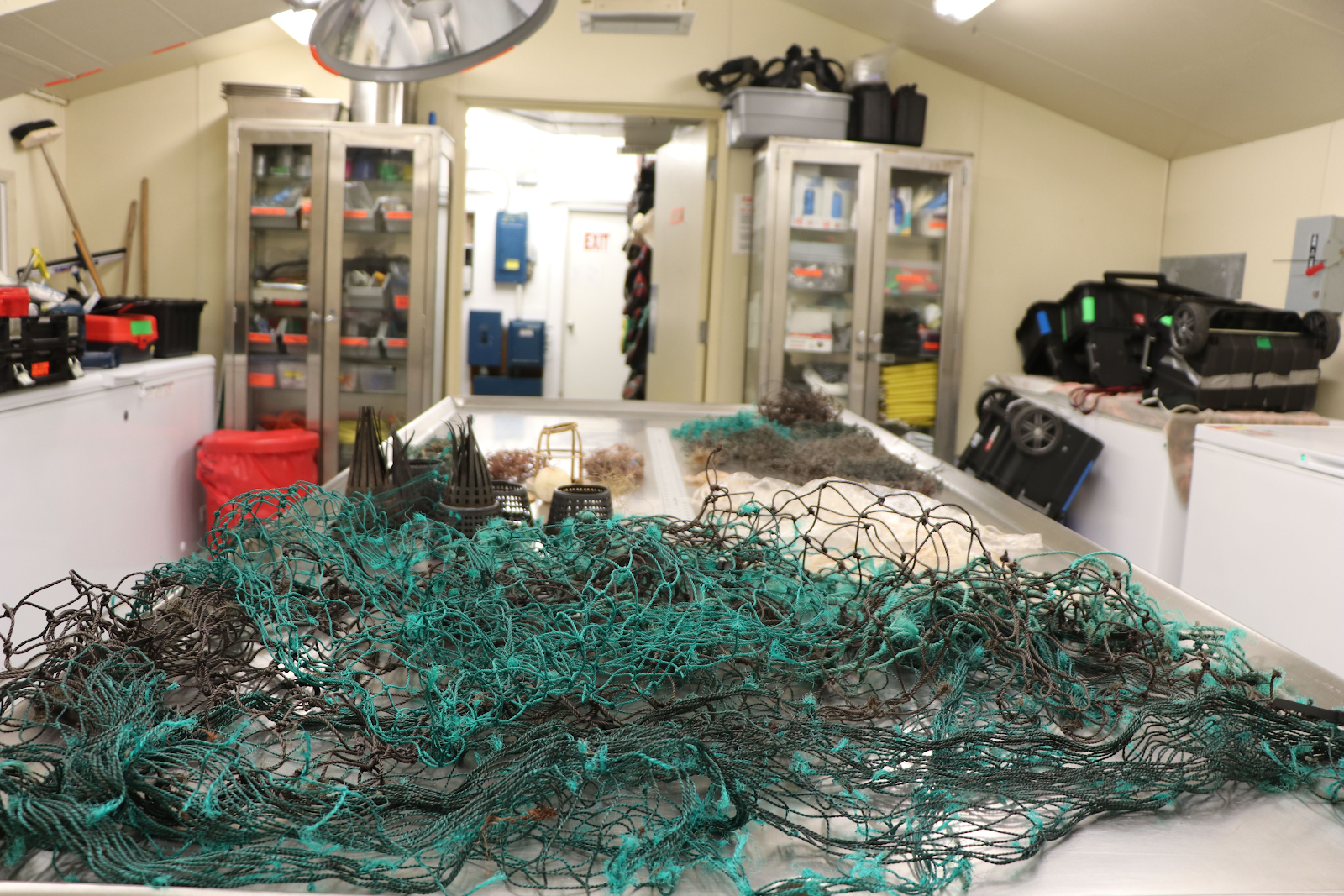
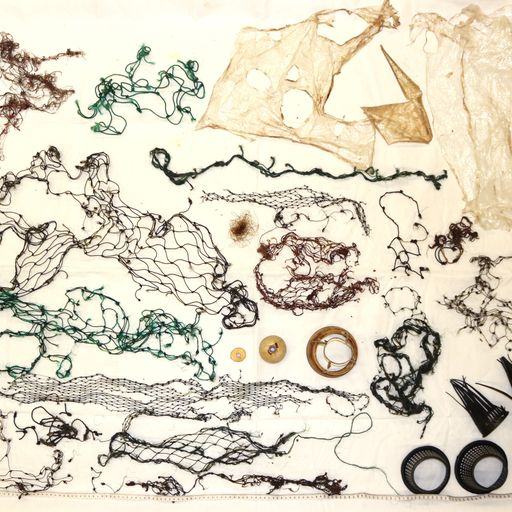
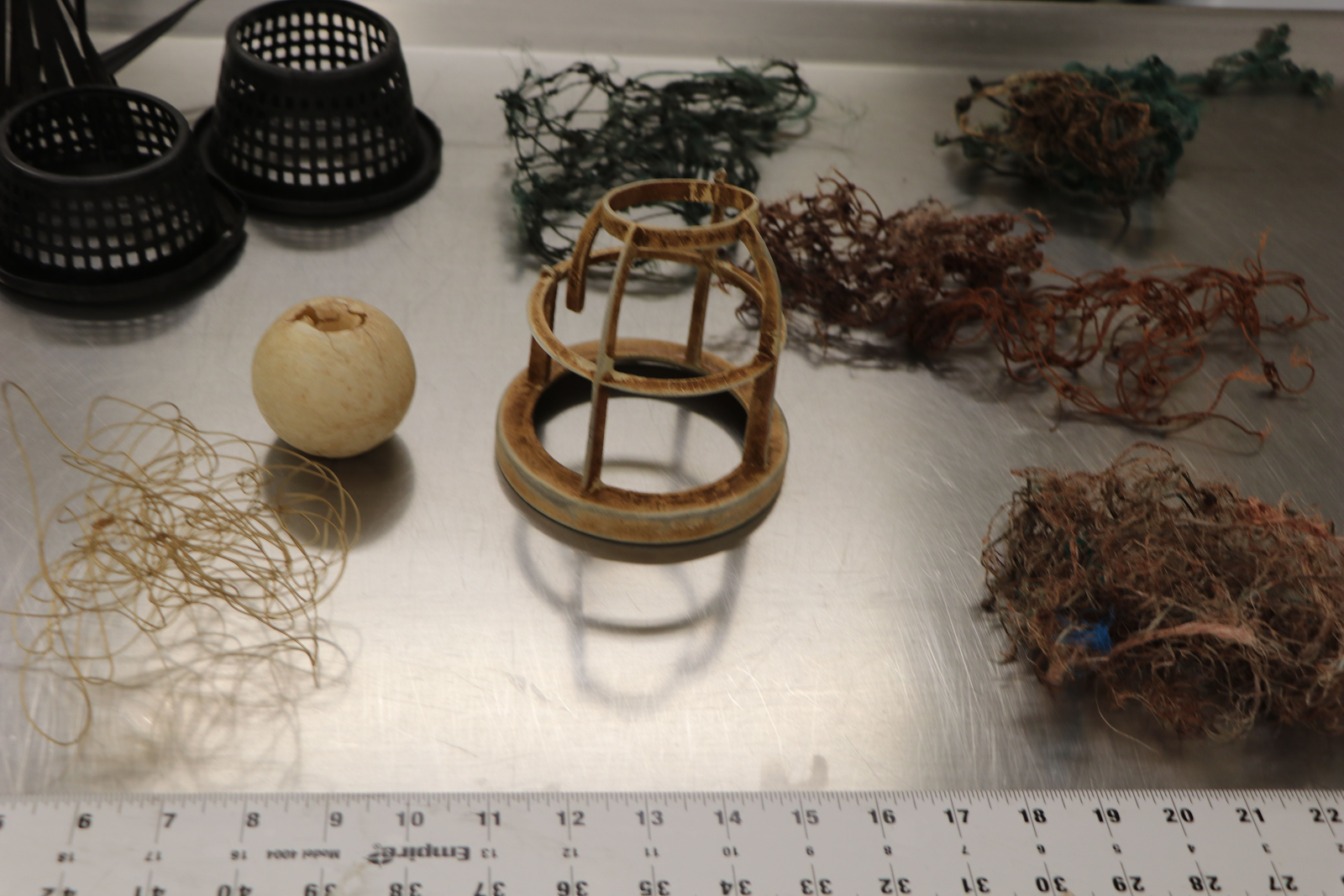
(Images--above and at bottom--of marine debris from sperm whale belly, courtesy UH Health and Stranding Lab.)

If you’re a fish or a turtle or most any kind of marine life feeding in the Pacific, it’s hard to avoid the plastic.

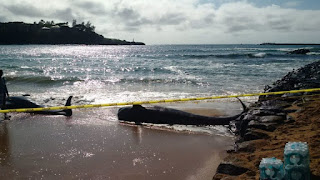
Almost all of the sea’s creatures end up ingesting some of it, and that includes the massive (56 feet, 50ish tons) sperm whale that washed up at Lydgate Park last week.

The Ocean Cleanup estimates 5 trillion bits of plastic in the ocean. 

And 1.8 trillion bits in the Great Pacific Garbage Patch, that vast gyre that runs roughly between Hawai’i and the Aleutians and California. 

The World Economic Forum estimates the ocean has 75 to 199 million tons of plastic. 

So if a critter opens its mouth to take a bite of food, it’s hard to miss getting some plastic as well.

And they do.

There are microplastics in squid. 

Plastics in all species of marine turtles. 

Plastics in tuna, including canned tuna meat. 

Plastics in many kinds of seabirds. 

The Maritime Aquarium in Connecticut estimates that by 2050, the way we’re going, there will be more plastic in the ocean than fish.  

So, no surprise when an adult sperm whale washed ashore dead last week, it had a bellyful. Of plastic.

“A major finding was the number of manufactured items in the whale’s stomach,” said Dr. Kristi West, director of the University of Hawaiʻi at Mānoa Health and Stranding Lab. It could have been enough plastic to cause a blockage, and could have contributed to the whale’s death, West said.

In addition to squid beaks and fish skeletons and other natural food remains, they found chunks of plastic netting, plastic bags, bits of rope, monofilament fishing line, a fishing net float, and several of the odd cone-shaped black plastic devices that are the doors to hagfish traps.

This is shocking, but it isn’t news. Whales of many species, including sperm whales, have been stranding all around the world with plastic in their guts. And the filter-feeding Humpback whales that seasonally slap and leap around Hawai'i are not exempt, although they tend to ingest tinier bits of plastic. 

The study into the cause of the Lydgate  whale’s death will continue with laboratory analysis of organ and other body parts, and it may be a long time before a firm cause of its demise is established, if it is.

And as for the plastics, where does it all come from? Certainly a lot from fishing operations—some of the ropes, and monofilament, and nets, and hagfish traps and plastic floats. But it’s estimated far more comes from the land—blowing off the shore, sluicing down storm drains and, the biggest source, washing down big rivers.

© Jan TenBruggencate 2023


Sunday, January 29, 2023

Why did the sperm whale die? That's not yet clear, but myriad possibilities

 It will likely be weeks or longer before we know why a big sperm whale washed ashore on Kauai, or we may never know.

Some folks have already been suggesting theories, but without doing the science, it’s guesswork.

There are many known causes of sperm whale strandings—many natural and some involving human activities.

Veterinarians and other wildlife experts are doing the hard work to conduct a necropsy on the more than 50-foot sperm whale that washed up at Lydgate Beach Park in Wailua, Kaua’i, on the morning of January 28.

But let’s look at some of the possibilities.

Whales do get old and die. They get viruses and other diseases. They can be affected by parasites. There is some evidence that climate change can impact navigation and food availability. They can be injured by natural (think big sharks) or human (think container ship impacts) causes. Noise can disorient them, and that noise can be from natural causes like undersea earthquakes, or human causes like deep sea mining exploration, sonar and noisy big ships.

The options really are too numerous for guesses to be taken seriously. Some recent strandings have had various causes.

One sperm whale that beached in the Florida Keys last year was very thin. On investigation, it had ingested marine debris, which had interfered with its ability to feed.

A 30-foot sperm whale that washed up this month in Oregon had injuries consistent with being hit by a ship.

This 2018 study suggests that some North Sea strandings may simply have been because the healthy but young sperm whales inadvertently swam into shallow water and couldn’t get back into the deep. 

Sperm whales, like many others, can become engangled in marine debris like ropes and buoys, and can be weakened by having to drag all that weight. Entanglement in fishing gear like buoys can make it difficult for whales to submerge for feeding.

This 2005 study and this 2009 study suggested that sunspot activity and even changes in the Earth’s magnetic field could impact sperm whale stranding. 

As we reported recently at Raising Islands, roughly half of recent stranded whales of various were associated with a newly described virus. 

In some cases, there are multiple things going on, such as skin disease, liver disease, parasites, viral infections, bacterial infections, fungal infections, high concentrations in blubber of man-made chemicals like pesticides and PCBs, and having ingested plastic while feeding. In many cases, it is not possible to determine which, if any, of these was the cause of the stranding.

And then there is the whole issue of climate change, which can impact marine life in numerous ways, including forcing animals into unfamiliar feeding territories, impacting feeding for juvenile animals, and much more. This Australian study from 2013 suggested: “Reductions in the extent of key habitats, changes in breeding success, a greater incidence of strandings in dugongs and cetaceans, and increased exposure of coastal species to pollutants and pathogens are likely.” 

In one month last year, 17 whales of several different species stranded off Norway. The cause is not known, and as the authors of this paper wrote, “Whale strandings are common globally, although to date there are still many challenges in identifying their cause.” 

© Jan TenBruggencate 2023

Thursday, January 26, 2023

New clues in Hawai'i whale strandings


Whale and dolphin strandings are generally fatal to the marine mammals involved, but also traumatize their human cousins who attend them.

Often, researchers have been unable to figure out why the animals appear to commit suicide. Now there’s a hint of a clue.

Two of the pilot whales that stranded (image above) on Kaua’i’s Kalapaki Beach in 2017 suffered from a newly discovered virus that affected multiple organs.

It was October 13, when five pilot whales drove themselves onto the sand at the popular beach outside Lihue, and fronting what is now the Sonesta Kauai resort. People tried pushing the whales back into the sea, but often they swam or washed right back in. More whales from the same pod were herded away from the beach by paddlers and surfers, and appeared to have survived and left the bay.

They were short-finned pilot whales, Globicephala macrorhyncus.

 A new study of necropsy samples from numerous whale and dolphin strandings—on Kaua’i, O’ahu, Molokai, Maui, Hawai’i Island, as well as Saipan and American Samoa—shows that those two Kaua’I animals and many of the other stranded cetaceans were suffering from a newly discovered beaked whale circovirus.

The study was published today (Jan. 26, 2023) in the journal Frontiers in Marine Research. Its authors are Cody Clifton and Kristi West of the University of Hawai’i College of Tropical Agriculture and Human Resources and the university’s Hawai’i Institute of Marine Biology; Ilse Silva-Krott of Hawai’i Institute of Marine Biology; and Michael Marsik of the National Marine Fisheries Service in Pago Pago.

They call the virus an “emergent disease with unknown population impacts.”

The researchers studied archived tissues collected in necropsies of 30 individuals involved in recent Pacific strandings—including from the brain, kidney, liver, lung, spleen and lymph nodes. In many cases, the virus—identified through PCR testing—was found in multiple organs.

The tissues were being stored at the University of Hawai‘i Health and Stranding Laboratory.

“Of the screened individuals, 15 animals tested positive in one or more tissues, with a single striped dolphin (Stenella coeruleoalba) testing positive in all six tissues,” they wrote.

“Brain tissue was the most consistently positive tissue type (69%), followed by lymph tissue (67%) and lung tissue (64%),” they wrote.

It is not clear whether the viral infection caused or was directly related to the strandings, but it is a significant medical issue for marine mammals.

“Infectious diseases pose a major threat to cetaceans and (beaked whale circovirus) may represent an important emerging disease within populations spanning the central, Western, and South Pacific,” the authors wrote.

Different circoviruses are known from pets and wild animals, including birds, and while they may cause minimal health effects, they can sometimes be fatal. They can be associated with tissue inflammation as well a tissue death in organs. They are often associated with difficulty breathing.

And yet, sometimes, animals can be profoundly infected without showing significant symptoms. A false killer whale accidentally caught at sea had the virus in its brain, lungs, liver and lymph nodes, and yet appeared perfectly healthy.

The earliest recognized occurrence of this virus was in a Longman’s beaked whale (Indopacetus pacificus) that stranded on Maui in 2010. The presence of this particular virus was not identified until 10 years after its death. That one was a very sick whale. It was infected with multiple viruses. The authors of the study said multiple infections like this are not uncommon.

And although that Longman’s Beaked whale gave the virus its name, the disease has now been found in 10 other species of marine mammal. And the authors fully expect it to be found in more marine mammals.

A press release on the study is here. 

© Jan TenBruggencate 2023

Saturday, January 7, 2023

Removing rats from islands has big impacts on nearshore ocean productivity

 New research shows that small islands without rats have more productive nearshore environments than those with rats.

It’s a fascinating bit of data that seems to confirm Leonardo Da Vinci’s observation: “Learn how to see.  Realize that everything connects to everything else.”

But how do rats and fish connect?

Well, through seabirds.

The birds catch fish at sea. They nest on islands. They poop on those islands. The guano runs off to the nearshore water, where it fertilizes the reef. That means reef fish have more to eat. (And then, of course, the seabirds eat the fish, closing a great circle.)

If you put invasive rats on such an island, they eat the birds and eggs, the seabird population collapses, there’s less guano, and reef fish populations do less well.

The details of this dynamic are described in a new 2023 paper in the journal Nature Ecology and Evolution. It is entitled, Terrestrial invasive species alter marine vertebrate behavior. 

Ultimately, it’s a natural nutrient cycle, and the rats break it. Across the globe conservation organizations have been trying to heal the cycle by eradicating alien rats from small islands. It’s a huge task.

The removal of rats from Lehua Island, north of Ni’ihau, required a concerted effort by a broad consortium that included the organization Island Conservation, along with the state Division of Forestry and Wildlife and its parent agency the State Department of Land and Natural Resources, U.S. Fish and Wildlife Service, U.S. Department of Agriculture’s National Wildlife Research Center in Hilo, Niihau Ranch, U.S. Coast Guard, National Tropical Botanical Garden and several other associated organizations and agencies. 

At Lehua, they were able to remove the rats, and have recorded recovering bird populations. Whether fish populations around the island have changed or increased has not been reported.

Most of the research to date on rat removal has been used to document the recovery of bird populations, like this report on Anacapa Island, off California. 

And this report on Hawadax Island in the Aleutians, formerly known as Rat Island. 

Guano has been mined off small bird islands around the world for many years, for use as a natural fertilizer for land-based agriculture. Guano has similar fertilizing impacts on aquatic systems, says the Nature Ecology and Evolution study.

“The movement of naturally occurring nutrients across habitats and ecosystems is a strong driver of productivity and can influence community dynamics,” the authors wrote.

They found that fish in rat-free environment have to spend less time fighting for food, and are able to cruise larger territories.

The research was done on 10 islands, 5 without rats and 5 with rats, in the Chagos Archipelago, which is in the Indian Ocean south of the Maldives. One finding: “Seabird densities on rat-free islands are up to 720 times higher, and the nitrogen input provided by seabirds is 251 times greater, than around rat-infested islands.”

One interesting finding is that there wasn not necessarily more algae growing on rat-free islands, but that the algae there was more nutritious, so fish didn’t have to eat as much.

The Nature study’s English and Canadian authors are Rachel L. Gunn, Cassandra E. Benkwitt, Nicholas A. J. Graham, Ian R. Hartley, Adam C. Algar and Sally A. Keith. Most are from the Lancaster environment Centre at Lancaster University.

An earlier study by some of the same researchers confirmed that rat-free islands had higher nutrient levels in nearshore waters. 

And this study suggests that while there aren’t necessarily more fish around rat-free islands, the fish grow faster and are significantly heavier.   “Overall mean body size was 16% larger around rat-free islands.”

© Jan TenBruggencate 2023

Wednesday, February 16, 2022

At Palmyra, native forests store more carbon than coconut plantations

There are lots of interesting things about native forests in the Islands, and The Nature Conservancy has just added an important one.

These forests do a better job of capturing carbon than planted forests, at least in the example of Palmyra Island, where the Conservancy and the U.S. Fish and Wildlife Service operate an atoll refuge a few hundred miles south of Hawai’i.

Native Hawaiian forests are excellent at capturing moisture and preventing aggressive, eroding runoff. That is in part due to the complexity of the Hawaiian forest. There are generally canopy trees, and smaller understory trees and shrubs and at the lowest level, ferns and mosses.

So when a heavy rain falls, its downward force is diminished by all the leaves and branches it encounters on the way down, and then the forest soaks it up like a sponge. So mountain streams in native forest areas run clear, not muddy. And they keep running even after weeks of dry weather, as the natural spongy forest floor lets the water seep out slowly.

By contrast, in a forest dominated by alien trees, like eucalyptus or Java plum, there is little understory growth. And heavy rains often lead to muddy runoff, eroded gullies, and sediment-filled streams. And shortly after the rain stops, the soils dry out.

(Image at right: Pisonia forest at Palmyra. Credit: Andrew Wright.)


A new study at Palmyra by The Nature Conservancy has shown that another benefit of native forests is that they also store more carbon than single-species forests like the coconuts that once dominated Palmyra’s coralline ground.

The paper was published in PLOS One by Kate Longley-Wood, Mary Engels, Kevin D. Lafferty, John P. McLaughlin and Alex Wegmann. The title: Transforming Palmyra Atoll to native-tree dominance will increase net carbon storage and reduce dissolved organic carbon reef runoff.

At Palmyra, the Conservancy has been replacing dense coconut stands, which are not native to the island, and were planted to promote a copra industry, with the native forest that once existed there.  They knew there would be impacts of this conversion, but it wasn’t entirely clear what they would be.

“To better understand how this landscape-level change will alter the atoll’s carbon dynamics, we used field sampling, remote sensing, and parameter estimates from the literature to model the total carbon accumulation potential of Palmyra’s forest before and after transformation,” the authors wrote.

Their research showed that the new forest increased carbon storage on the atoll’s land areas by nearly 12 percent, and also reduced the flow of dissolved organic carbon into the island’s lagoon. That, in turn, is expected to result in healthier corals and a strong community of the species reliant on the coral reefs.

“We’ve demonstrated that better stewardship of natural resources can increase their carbon capture ability,” said lead author Kate Longley-Wood, Ocean Mapping Coordinator with TNC’s Protect Oceans, Lands and Waters program. “That native tree species are better for carbon capture and ocean health is the icing on the cake.”

All that said, it takes time for the effect to be seen, and the story will likely change somewhat over time as the restored forest matures. There is a loss of carbon in the standing trees when the coconuts are cut down and allowed to be replaced by native Pisonia grandis (Pu’atea in Tahitian or cabbage tree in English), Heliotropium foertherianum (beach heliotrope), Pandanus tectorius (hala or screwpine) and other species native to the atoll.

The native species are considered to be superior habitats for native seabirds, they store more carbon, and they support a larger native ecosystem.  But the results don’t mean it’s appropriate to go around cutting down all the coconuts elsewhere, as they could be important parts of the human communities on some islands. The scientific name of coconut is Cocos nucifera, sometimes written C. nucifera.

“C. nucifera’s role in human migration and settlement throughout Oceania is notable, and control of C. nucifera to transform native forest should be balanced with the societal value provided by C. nucifera to Pacific Island communities,” the paper said.

© Jan TenBruggencate 2022

Thursday, December 13, 2018

Missing Hawaiian humpback whales? They're staying late in Alaskan waters, but it's still not certain why.


Hawai`i's humpback whales are missing, and now there are new clues about why.

In Hawai`i as well as other southern migration areas, steep declines in whale numbers are being reported. Researchers in Alaskan waters now report that they're seeing whales that are staying in northern waters instead of migrating.

(Image: Humpback in Sitka Sound, Mt. Edgecumbe: Humpback whale flukes are visible just on the surface with Mt. Edgecumbe on the horizon in Sitka, Alaska Sunday, October 28, 2018. Credit: Seanna O’Sullivan/UAS.)
What's not yet clear is whether they will just delay migration, perhaps because of warmer conditions in areas like Sitka Sound, or whether they can't migrate because changes in food availability have deprived them of the energy for the 30-day migration.

It is also not yet clear whether the delayed or omitted migrations will impact populations. Humpback whales make the trip to southern waters to give birth to their young.

“We are concerned that the offshore warm water anomaly known as 'the blob' and other ocean conditions has had a negative impact on humpback whale prey.” said Ellen Chenoweth, a UAS Adjunct Professor at University of Alaska Fairbanks.

Researchers are trying to raise the funds to figure out what's going on, she said.  It is not just that the whales are staying longer, but there are indications they are in distress. A release from the University of Alaska Southeast suggests there's something serious going on: "The researchers noted that they are seeing fewer calves, skinnier whales and more whales staying longer into winter feeding on herring, partially migrating and returning or possibly not migrating at all."

“We would like to quantify the changes in the numbers and distribution of whales present in winter and try to get at the cause and effect. But we need more monitoring funds. This means we need gas in the boat, time to be out there later in the season and, more technicians to manage the data and document the whales and more time on the water,” Chenoweth said.

The UAS Whale Research and Education Support fund will support the research. Donations can be made here. 

The dramatic change in migration habits mars a textbook success story in whale conservation.
Humpback whale populations had been drawn so low by whaling that they were listed as endangered in 1973 under the Marine Mammal Protection Act. 
By the 1980s, numbers that winter in Hawai`i had risen from a few thousand to more than 11,000. Almost all of those whales summer in southeastern Alaskan waters where the feed on schools of capelin, juvenile walleye pollock, sand lance, Pacific herring and krill.  

The dramatic increase in humpback populations continued into the 2010s, but appeared to stop and then drop a couple of years ago.

“There is a substantial decline in the number of whales we’re seeing. But when we look very closely at least in the waters off Lahaina (Maui), which is where most of the whales congregate, that decline is very much accounted for by the drop in the number of mother and calf pairs,” said Rachel Cartwright, a California State University researcher who heads the Keiki Kohola project.

An Associated Press story reviewed the reports of declining whale numbers in the islands. 

Cartwright said that reduced food supplies in the northern feeding waters are among the suspects for the decline. Chenoweth said Alaskan fisheries officials are also concerned about the impact of feeding whales on winter populations of schooling herring.
Early indications are that the first decline in humpback whales was caused by direct killing of the animals by the whaling fleets of the 1800s and 1900s. The cause of the new decline may be indirect: the impact of climate change on water temperatures and prey availability. 

©Jan TenBruggencate 2018

Friday, November 30, 2018

Kauai pilot whale strandings punctuated by seven separate stranding incidents in a week down under


Dead pilot whales Kalapaki Beach. Credit: Author
Whale strandings—like the one that killed five pilot whales on an East Kaua`i beach last year--remain among the most mysterious of natural occurrences.

Kaua'i residents were traumatized the morning of Oct. 13, 2017, as glossy black pilot whales lay gasping on the sand at Kalapaki Bay. When well-meaning citizens shoved them back into deep water, most returned to the sand.

Boaters in canoes and power craft patrolled the bay, trying to keep remaining members of the pod from stranding. Eventually, five big whales were dead.

Seven strandings within the past week of more than 200 whales of several species in New Zealand and Australia has refocused attention on marine mammal strandings.

In all those southern hemisphere strandings, as in the Kaua`i stranding, the cause was not immediately apparent.

And in the Kaua`i case, despite intensive studies over a full year, scientists have been able to identify no obvious trigger.

"We still have no smoking gun but we're still looking," said David Schofield, stranding coordinator for NOAA's Pacific Islands Regional Office.

One of the Kaua`i animals, an older one, had signs of degenerative disease in earbones, but that was unlikely a cause of stranding, he said. One whale had about 10 pounds of marine debris in its gut, but that, too, was not a likely cause, Schofield said.

When animals are diseased, they are often malnourished. These whales weren't starved. There was fresh food in their bellies. There were no obvious signs of disease identified in a well-staffed mass necropsy that continued through the night of the strandings.

They weren't damaged by sonar: No sonar vessels were operating in the area, and in any case, the necropsies found none of the kind of inner ear damage caused by high-intensity sonar.

There were no signs of disease apparent within the first few weeks after the stranding.

Muscle and organ samples were sent to specialized laboratories, but tests for pesticides or rat killers like diphacinone were negative. (Diphacinone was of interest because it had been used in a rat control effort on Lehua Islet in the weeks before the strandings.)

Researchers are still working on laboratory studies of possible contaminants in the whale tissues, and tissue samples remain in storage.

"We keep the file open. As new science becomes available, we may go back and look again," Schofield said.

A series of seven separate strandings by different whale species in New Zealand and Australia—all within the past week--adds to the enigma.

Mystery is often the case in explaining whale strandings. And it’s just as much a puzzle this week in New Zealand and Australia.

Within the space of seven days, whales drove themselves on five separate New Zealand beaches from the North Island down to little Stewart Island, which lies south of Aotearoa's South Island, and even to the remote Chatham Islands, which lie in the Pacific east of New Zealand. And another two species died this week on the same beach, but in separate strandings in southern Australia.

Ninety pilot whales went ashore on the Chatham Islands today. An estimated 50 were dead or in such bad shape that wildlife officials euthanized them. A few were able to refloat themselves and may survive.

Four days earlier, 145 pilot whales went ashore on remote Mason's Bay on Stewart Island. They were the same species as in the Kaua`i 2017 stranding. All the Stewart Island whales died on a beach so isolated that it is only accessible by foot trail or by air. An aerial photo shows the one to two-ton whales scattered by the dozens along the shore, like so many akule drowned in a surround net.

On the North Island, 12 pygmy killer whales went ashore on one beach this past week. A few were reportedly pushed back into the water and may have survived, but at least half were dead. A sperm whale died on another North Island beach, and a pygmy sperm whale on still another.

Meanwhile, in Australia, 27 pilot whales and a humpback whale were spotted dead this week on a remote beach in Croajingolong National Park, which is in Victoria, the southernmost district on the Australian mainland.

They were spotted by air. By the time wildlife officials were able to get there, some of the pilot whales were still alive, but were so severely traumatized that they were put down. The humpback seems to have stranded earlier and was already dead, Australian wildlife officials said.

And once again, at this point nobody knows why. It is a long distance between these locations. From Stewart Island to the northern beaches of North Island is nearly 1,000 miles. From the Chathams in the Pacific to Victoria in the Tasman Sea is 2,000 miles.

There are lots of theories, many being proposed without evidence.

Folks looking for a common thread in the latest strandings have suggested climate change, but that's a guess. And it wouldn’t explain that the largest known stranding occurred a century ago. One thousand pilot whales stranded and died in the Chatham Islands in 1918.

The New Zealand stranding response organization Project Jonah, says it might be illness, parasites, pollution, injury from boat strikes, human undersea seismic work or sonar, disorientation due to shallow waters, boat noise, undersea volcanic or earthquake activity, and in some cases, simple geological traps—whales swimming into a bay a high tide an being unable to leave at low tide.

There is, in many of these cases, a kind of community unity. Once one whale is in trouble, the others stay in support—even at the risk of dying.

"Whatever the reason for the initial stranding, social cohesion may result in mass beaching. Their strong social bonds may prevent them deserting a helpless member. Going to their aid, these animals may then also become stranded themselves," says Project Jonah.

Strandings occur seasonally in some parts of the world, although not in Hawai`i. The stranding season is just beginning in the Australia-New Zealand area. Schofield recalls working Cape Cod, where there was also seasonality.

"In wintertime, when you saw certain tides, sea conditions and moon phase, you could almost predict them," he said.

And even so, the causes remain a mystery.

© Jan TenBruggencate 2018