Friday, February 24, 2023

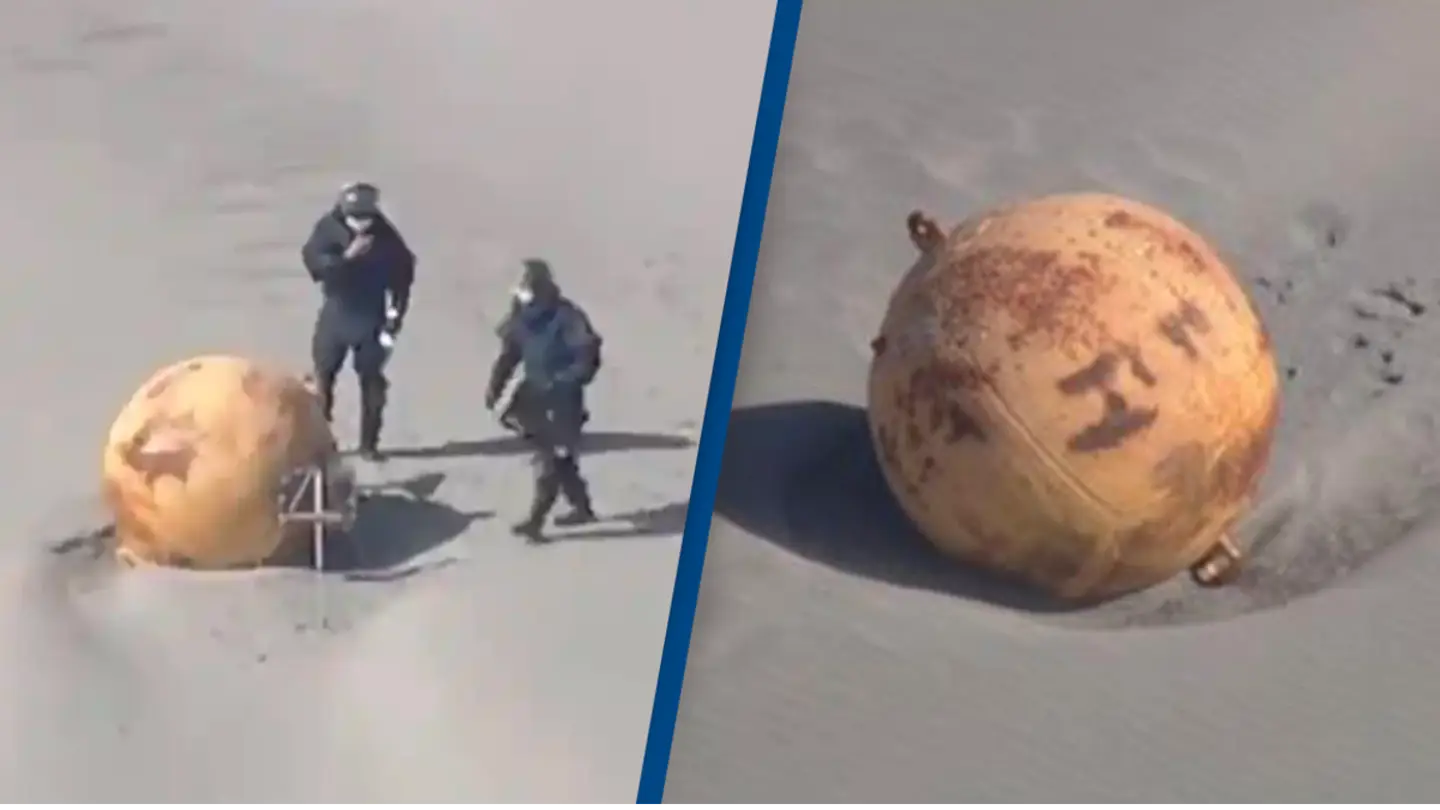
The international enigma, a baffling sphere on Japan beach, would be no mystery to Hawai'i beachgoers

(Image: Fuji News Network image of the globally baffling sphere on Hamamatsu City beach.)


A UFO. A dragon egg. A communist plot. Another spy balloon.

Wow.

International media report they’re baffled by a mysterious metal sphere that washed up on a Japan beach.

It wouldn’t be baffling to any Hawai’i beachgoer, because we see them all the time. They wash up regularly, sometimes painted orange or yellow, but most often covered with brown-red rust. Big, hollow (or occasionally foam-filled) steel spheres used in various maritime activities.

The sphere in question, 4-5 feet in diameter, washed up on a long stretch of sand off Hamamatsu City. It caused great consternation, locally and internationally. It was isolated with yellow caution tape. Authorities subjected it to tests to determine it was empty. Eventually they hauled it off the beach and disposed of it.

And international media had fun with it. Perhaps because, after the Chinese balloon and the “pico” balloons shot down over Alaska, Canada and Lake Huron, we were primed for stories about weird round things.

The Guardian breathlessly wondered whether it was a “Spy Balloon, UFO or Dragon Ball” or maybe even a stray mine. 

Nope.

The BBC called it a “mystery sphere” and said Japan was perplexed, with some folks calling it a “Godzilla egg.” 

Oh my. But, nope.

The British media network Unilad suggested some folks thought it was a devious device sent by China or North Korea. 

Uh, uh.

The India Times reported that February 23, 2023, Japanese authorities confirmed it was “marine equipment” that had washed ashore. 

They wash up periodically on Hawaiian beaches, too. They are industrial buoys, used by maritime industries for various purposes. One popular purpose in Hawai’i is as floats for FADs or fish aggregating devices. They are also used as moorings for ships, with one end chained to an anchor and the other tied to the boat. They are sometimes used to support oceanographic monitoring equipment.

And occasionally they break free and end up as marine debris on beaches.

You can buy them

And they don’t always come as spheres

Many, like the Hamamatsu City sphere, have connection points at both ends

© Jan TenBruggencate 2023

Wednesday, February 22, 2023

Wrapping up the shot-down balloons story: Yes, balloons can crash planes

 We may not learn a whole lot more about the four objects shot down during February 2023 by American jets, other than they appeared to all be balloons carrying some sort of payload.

The first was a Chinese-owned giant balloon that drifted across North America from Alaska to North Carolina, where it was shot down February 4 after it passed the coast into the Atlantic. As best we know, it had surveillance equipment on board, multiple antennas, and presumably the capacity to track and report on U.S. communications. 

U.S. intelligence agencies tracked it from takeoff in south China, all the way to its downing off the Carolinas. We assume that we were able to gather significant intelligence from it while it operated, and more after most of it was recovered from the Atlantic. 

Three more balloons were shot down over the coastal ice in Alaska February 10, the forests of the Yukon in Canada February 11 and over the waters of Lake Huron February 12.

News reports indicate all three of them were most likely very small “pico balloons,” which are much smaller than the Chinese balloon, hard to track on radar, and which normally carry miniature payloads. One standard for these balloons is to carry transceivers that allow ham radio operators to communicate with them, or to transmit messages to them to be retransmitted to other radio operators.

None of the three small balloons was recovered, but an Illinois radio and balloon hobbyist group said the Canadian object was probably theirs.

The Northern Illinois Bottlecap Balloon Brigade said it might have been one of their mylar balloons, with the call sign K9Y0. It had been up for half a year, and had circled the globe nearly seven times. They don’t know for sure that the Yukon object, but they said it stopped transmitting about the time of the reported destruction of an object by a U.S. Fighter’s rocket. Aviation Week reported on it here. 

There may be dozens of similar balloons orbiting our planet at any time, on top of the weather balloons, corporate spy balloons, hot air balloons, party balloons, and nations’ spy balloons. In all, this Scientific American article says there may be hundreds to thousands up over the U.S. at any given time. 

Some have radio transponders so aircraft can detect them, some are reflective so they show up clearly on radar, but some are ghostly hard to detect, yet still dangerous to an aircraft that might suck one into its engine or around its control surfaces.

While plane-balloon interactions are rare, they have occurred. Most result in only minor damage to the plane, as when this Air Canada flight took out a weather balloon in 2019. https://simpleflying.com/air-canada-weather-ballon-collision.

But some have caused crashes.

Forty-five people were killed in a 1970s Russian crash after a propellor plane hit a weather balloon. 

In California in 1994, a twin-engine Piper Comanche went down, killing its pilot, after it apparently hit party balloons. 

In 2007 a Cessna lost a wing after hitting the tether line for an inflatable airship. 

And there are near misses, as when this Qatar Airlines Boeing jet managed to dodge a large balloon over Brazil last year. 

© Jan TenBruggencate 2023

Monday, February 13, 2023

Maybe alien, maybe not balloons, speculation rampant about the mysterious shot down objects

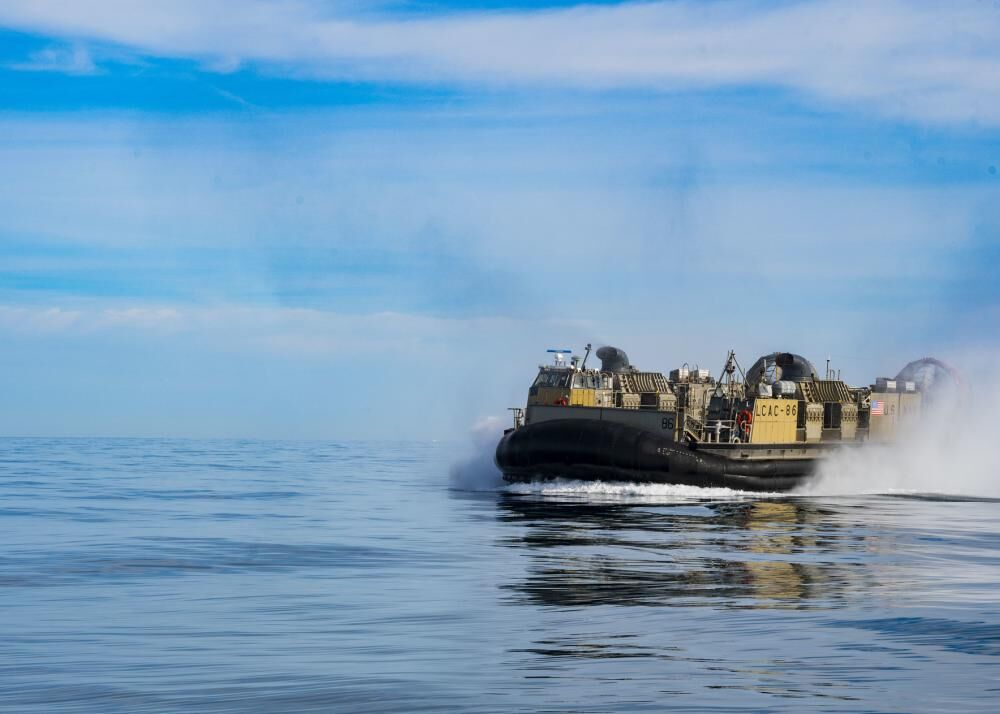
 (Image: U.S. Navy assault craft working on the recovery of debris from the Chinese balloon shot down over South Carolina February 4. Credit: U.S. Navy.)


Everything about the mystery objects we’ve been shooting down remains in limbo—partly because we and the Canadians have not completed operations to recover them.

Some American officials say it’s a step too far to suggest they are alien craft from extraterrestrial sources. Others won’t rule that out.

But we won’t have clear indications until we can actually inspect the wreckage. Until then, it’s all Area 51-type speculation.

Much of the February 4 Chinese balloon debris is still reportedly off South Carolina in 50 feet of water. The item shot down February 10 over Alaskan sea ice hasn’t been recovered because of harsh Arctic winter weather. The Royal Canadian Mounted Police are working to get at the debris of the February 11 shoot-down in wild country in the Yukon. And American forces are still trying to get at the debris of the February 12 object, which reportedly fell into Lake Huron in the American/Canadian Great Lakes.

Increasingly, descriptions of these devices are bizarre. One thing that seems clear is that they are very different. Early reports suggest they might not even all be balloons, although that’s what Senate Majority Leader Charles Schumer believes they are, according to a Los Angeles Times report.  

They are clearly different things. They fly differently. They look different.

The Chinese balloon drifted at 60,000 feet. The Alaskan and Yukon objects at 40,000 feet, and the Lake Huron object at 20,000 feet.

Descriptions vary. The Chinese balloon appeared spherical and as big as three buses. The Alaskan balloon was the size of a small car. The Yukon object was cylindrical. The Lake Huron object octagonal with strings hanging down.

In descriptions, caution has sometimes veered into the implausible, as when Gen. Glen D. VanHerck, the commander of the Air Force’s Northern Command, was asked if they might be from outside our planet. He said, “I haven’t ruled out anything at this point.” Other Administration officials said there’s no indication of anything from outside the Earth being involved.

It makes the most sense that these would all be lighter-than-air balloons of some kind, but VanHerck in a CNN story said, essentially, not so fast.

"I'm not going to categorise them as balloons. We're calling them objects for a reason… What we are seeing is very, very small objects that produce a very, very low radar cross-section," he said. 

In a CNN report, the government also expressed caution about assuming the Alaskan, Canadian and Great Lakes objects are balloons: "These objects did not closely resemble, and were much smaller than, the [4 February] balloon and we will not definitively characterise them until we can recover the debris," CNN reported, citing a White House National Security spokesperson. 

So, what? Drones? If so, how can they stay aloft for periods long enough to be drifting slowly over hours and days?

China sought to put some perspective into the discussions, saying the United States does a lot of its own balloon work. In an Associated Press article, Wang Wenbin, an official of China’s foreign ministry, said “It is also common for U.S. balloons to illegally enter the airspace of other countries… Since last year, U.S. high-altitude balloons have illegally flown over China’s airspace more than 10 times without the approval of Chinese authorities.”

That suggests the possibility that some of the high altitude objects we’re seeing could be our own vehicles, perhaps drifting post-mission.

But the one thing we know is that the Chinese balloon downed off South Carolina was Chinese, as China has confirmed that. And initial indications are that there was American technology in its electronics package. And in response to that, the U.S. has prevented six Chinese aerospace firms from using American technology without U.S. approval.

In a Washington Post report, the White House suggested China continues to downplay its own actual intrusions into the airspace of other nations.

“This is the latest example of China scrambling to do damage control. It has repeatedly and wrongly claimed the surveillance balloon it sent over the United States was a weather balloon and to this day has failed to offer any credible explanations for its intrusion into our airspace and the airspace of others,” said White House spokeswoman Adrienne Watson. 

China says its balloon was collecting atmospheric data, not spying on the land below.

And meanwhile, China was reporting that it was getting ready to shoot down some kind of flying or drifting object over its own territory. 

“Local maritime authorities in East China's Shandong Province announced on Sunday that they had spotted an unidentified flying object in waters near the coastal city of Rizhao in the province and were preparing to shoot it down, reminding fishermen to be safe via messages,” wrote Forbes, citing China’s state-controlled Global Times.


China urged its fishermen to be alert, and to take photos of any debris that lands nearby.

© Jan TenBruggencate 2023
Sunday, February 12, 2023

A fourth high altitude object shot down, this one over Lake Huron. This is just bizarre.

Is there something new and strange and scary going on in our atmosphere, or are we just hyperalert to stuff that’s been there all along?

Maybe we're now seeing it largely because we're now looking for it. And because we've only recently developed the technology to track it electronically. CNN reported that we've only been able to do do so for the past year. 

After two objects were shot down over Alaska Friday and the Yukon Saturday, the airspace over Montana was closed late Saturday due to a radar signal of something that could not be confirmed by jet, and then today, Sunday, the airspace over Lake Michigan was temporarily closed “for national security reasons.”

Then, minutes before this writing, the military shot down an object over Lake Huron. It is not clear whether that is the same object that caused the airspace closure over Lake Michigan or something else. Lake Huron is just east of Lake Michigan.

We have so little information that it’s difficult to know what to make of all this. But it’s certainly not all a bunch of weather balloons, as some have suggested. That said, it might be a whole lot of different lighter-than-air craft sent aloft by governments, corporations and even individuals.

It has been reported that the “objects” over Alaska and Canada were smaller and different from the Chinese spy balloon shot down off South Carolina a week earlier. That balloon was big and roughly spherical. The Alaskan object was much smaller, did not look like the Chinese balloon and maybe didn’t have intelligence-gathering equipment. The Canadian defense minister said the Canadian object was cylindrical, and one pilot said it had the capacity to interfere with his navigational equipment. Another pilot noticed nothing like that. 

We have no information about the object shot down over Lake Huron. 

Jets scrambled over Montana late Saturday could find nothing at the site of a “radar anomaly” that prompted a short closure of Montana airspace to civilian aircraft. As this is written, we know nothing about what prompted the Lake Michigan airspace closure today (February 12, 2023.) That airspace closure was ended after a few hours. Shortly afterward, the Lake Huron object came down.

There seem to be fleets of Chinese intelligence-gathering balloons drifting in our skies, and over the skies of dozens of nations. Four months ago, the Pentagon said, a Chinese spy balloon crashed somewhere near Hawai’i, but we don’t know whether anything was recovered from it. At the same time the Chinese balloon was drifting across America two weeks ago, another was floating over Central America.

China says they’re just weather balloons, but if so, they are big, expensive weather balloons. The one shot down two weeks ago had a massive solar panel array hanging under it. That would power a whole lot of electronics.

(I have personally recovered weather balloon electronics, which are tiny--little styrofoam boxes the size of a pocket transistor radio. That's not what was hanging from the Chinese spy balloon.)

Every major country uses weather balloons, and some—like China, the United Kingdom and the United States—use spy balloons.

And then there are also private company balloons, like the ones that raised concerns off Hawai’i a year ago, which were aeronautical balloons developed by a South Dakota firm called Raven Aerostar. They had been launched from South Dakota and had been aloft for several months. Raven Aerostar said those balloons were designed to carry electronics that could provide internet service to remote areas, could collect imagery and perform other functions.

The Raven Aerostar website provides some insight into ALL the different lighter-than-air vehicles that are available. They include Thunderhead Balloon Systems for long-duration flights. And Super Pressure Balloons for stratospheric missions. And Zero Pressure Balloons that take payloads to “the edge of space.”  And Sounding Balloons for short duration meteorological missions.

And there are Raven’s Stratospheric Airships, which look more like giant blimps than balloons. They are capable of operating at 60,000 to 70,000 feet and can stay up for months.

Those are different from dirigibles, which are maneuverable lighter-than-air craft. There are also hot air balloons, which have been a “thing” since the 1700s.

Google/Alphabet in 2021 shut down its Loon program, which proposed using balloons to provide internet service to remote areas. 

Lots of stuff drifting across the skies. As mentioned above, there is indication that the United States within the past year or so has increased its capacity to identify these low-speed, high-flying devices. That could be why we’re suddenly seeing more detections.

© Jan TenBruggencate 2023

Saturday, February 11, 2023

UFOs (now UAPs) getting shot down left and right--what the heck is going on?

The three UFOs shot down in the past couple of weeks are hardly alone—the military is reporting that UFO sightings are now running in the hundreds per year.

What the heck is going on?

We've seen strange objects off Hawai'i, and the Air Force has scrambled to check them out. There have been a couple of U.S. corporate balloons, and a Chinese balloon. So far, we haven't shot any down off Hawai'i (as far as wel know.) But policies seem to be changing, particularly when these things appear in skies occupied by passenger aircraft. 

The Chinese spy balloon we shot down two weeks ago already seems fairly mundane in view the bigger story. 

Now we've shot down an unidentified, unmanned object over northern Alaska. And today, another was shot down over the central Yukon in Canada.

The Canadian Minister of National Defense, Anita Anand, reported that the item shot down over Canada today was cylindrical in shape—that doesn’t sound like a balloon. It was flying at 40,000 feet, the same elevation as the object shot down the day before over Alaska.

This year, we have learned of hundreds more UFOs (now called UAPs) being identified over our skies, many by trained military pilots.

“Unidentified Aerial Phenomena (UAP) reporting is increasing,” said an unclassified report from the federal administration to Congress last month. The Director of National Intelligence issued the report under the title, “2022 Annual Report on Unidentified Aerial Phenomena.” 

Some of the things they’re seeing in our skies are understandable. Weather balloons and such. Some are being found in interesting places, including high security places. There is probably some bias in the data, because there would naturally be a lot more eyes in the sky in such places, but there sure seems to be something else going on, too.

Some of the objects have characteristics of spying activity: “UAP events continue to occur in restricted or sensitive airspace, highlighting possible concerns for safety of flight or adversary collection activity,” that report said.

The U.S. military is taking that seriously, having established the Department of Defense (DoD) All-Domain Anomaly Resolution Office (AARO.) Its goal—Figure out what’s going on. It will link military and intelligence branches of the U.S. government, to work together “against the UAP problem set.”

Canada’s Anand reported today that Canada plans to dramatically increase its own capacity to respond to aerial threats.

There are lots of problems with figuring out UFO/UAP identities, including distance, weather, bad lighting, and confusing sensor data. And due to such issues, some assessments are simply wrong: “a select number of UAP incidents may be attributable to sensor irregularities or variances, such as operator or equipment error.”

But not all of them. Of 366 new reports studied by AARO in less than a year, the organization preliminarily concluded that 26 were some kind of unmanned aircraft, 163 were balloons or objects like balloons (one presumes things like blimps), and six were dismissed as clutter. But that left 171 uncharacterized, and some of them had spooky behavior.

“Some of these uncharacterized UAP appear to have demonstrated unusual flight characteristics or performance capabilities, and require further analysis.”

There was one report that the Yukon UAP may have been interfering with a military jet's sensors. 

Stay tuned. Ufology is suddenly top of mind, has moved clear of the woo-woo set, and is being treated as a significant threat by the U.S as well as Canada.

© Jan TenBruggencate 2023