Showing posts with label Physics. Show all posts

Monday, February 13, 2023

Maybe alien, maybe not balloons, speculation rampant about the mysterious shot down objects

 (Image: U.S. Navy assault craft working on the recovery of debris from the Chinese balloon shot down over South Carolina February 4. Credit: U.S. Navy.)
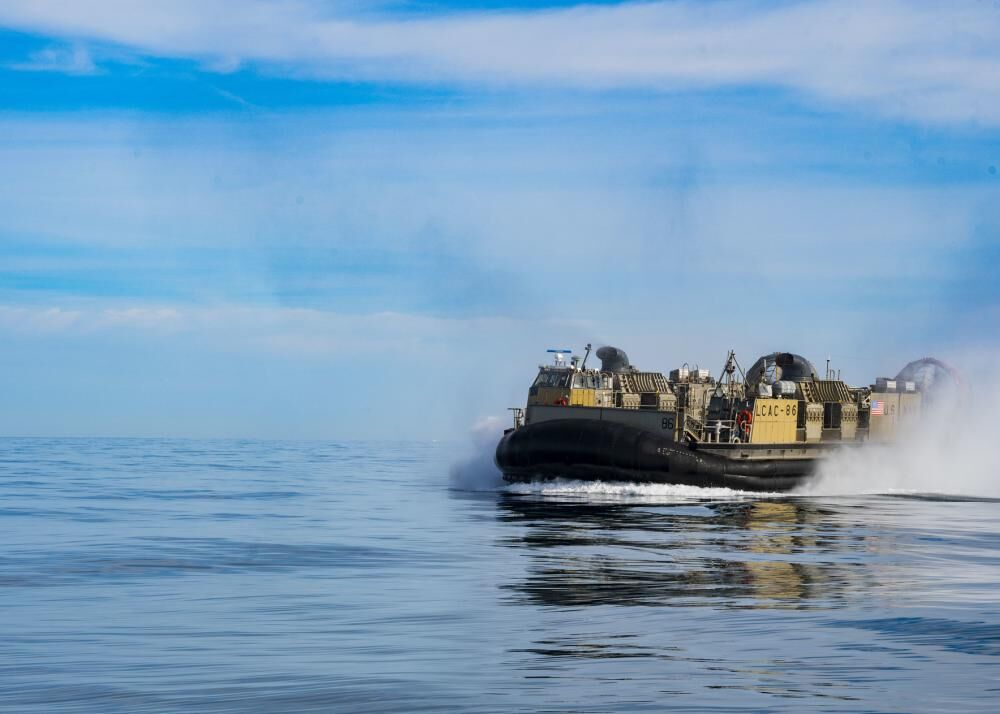

Everything about the mystery objects we’ve been shooting down remains in limbo—partly because we and the Canadians have not completed operations to recover them.

Some American officials say it’s a step too far to suggest they are alien craft from extraterrestrial sources. Others won’t rule that out.

But we won’t have clear indications until we can actually inspect the wreckage. Until then, it’s all Area 51-type speculation.

Much of the February 4 Chinese balloon debris is still reportedly off South Carolina in 50 feet of water. The item shot down February 10 over Alaskan sea ice hasn’t been recovered because of harsh Arctic winter weather. The Royal Canadian Mounted Police are working to get at the debris of the February 11 shoot-down in wild country in the Yukon. And American forces are still trying to get at the debris of the February 12 object, which reportedly fell into Lake Huron in the American/Canadian Great Lakes.

Increasingly, descriptions of these devices are bizarre. One thing that seems clear is that they are very different. Early reports suggest they might not even all be balloons, although that’s what Senate Majority Leader Charles Schumer believes they are, according to a Los Angeles Times report.  

They are clearly different things. They fly differently. They look different.

The Chinese balloon drifted at 60,000 feet. The Alaskan and Yukon objects at 40,000 feet, and the Lake Huron object at 20,000 feet.

Descriptions vary. The Chinese balloon appeared spherical and as big as three buses. The Alaskan balloon was the size of a small car. The Yukon object was cylindrical. The Lake Huron object octagonal with strings hanging down.

In descriptions, caution has sometimes veered into the implausible, as when Gen. Glen D. VanHerck, the commander of the Air Force’s Northern Command, was asked if they might be from outside our planet. He said, “I haven’t ruled out anything at this point.” Other Administration officials said there’s no indication of anything from outside the Earth being involved.

It makes the most sense that these would all be lighter-than-air balloons of some kind, but VanHerck in a CNN story said, essentially, not so fast.

"I'm not going to categorise them as balloons. We're calling them objects for a reason… What we are seeing is very, very small objects that produce a very, very low radar cross-section," he said. 

In a CNN report, the government also expressed caution about assuming the Alaskan, Canadian and Great Lakes objects are balloons: "These objects did not closely resemble, and were much smaller than, the [4 February] balloon and we will not definitively characterise them until we can recover the debris," CNN reported, citing a White House National Security spokesperson. 

So, what? Drones? If so, how can they stay aloft for periods long enough to be drifting slowly over hours and days?

China sought to put some perspective into the discussions, saying the United States does a lot of its own balloon work. In an Associated Press article, Wang Wenbin, an official of China’s foreign ministry, said “It is also common for U.S. balloons to illegally enter the airspace of other countries… Since last year, U.S. high-altitude balloons have illegally flown over China’s airspace more than 10 times without the approval of Chinese authorities.”

That suggests the possibility that some of the high altitude objects we’re seeing could be our own vehicles, perhaps drifting post-mission.

But the one thing we know is that the Chinese balloon downed off South Carolina was Chinese, as China has confirmed that. And initial indications are that there was American technology in its electronics package. And in response to that, the U.S. has prevented six Chinese aerospace firms from using American technology without U.S. approval.

In a Washington Post report, the White House suggested China continues to downplay its own actual intrusions into the airspace of other nations.

“This is the latest example of China scrambling to do damage control. It has repeatedly and wrongly claimed the surveillance balloon it sent over the United States was a weather balloon and to this day has failed to offer any credible explanations for its intrusion into our airspace and the airspace of others,” said White House spokeswoman Adrienne Watson. 

China says its balloon was collecting atmospheric data, not spying on the land below.

And meanwhile, China was reporting that it was getting ready to shoot down some kind of flying or drifting object over its own territory. 

“Local maritime authorities in East China's Shandong Province announced on Sunday that they had spotted an unidentified flying object in waters near the coastal city of Rizhao in the province and were preparing to shoot it down, reminding fishermen to be safe via messages,” wrote Forbes, citing China’s state-controlled Global Times.


China urged its fishermen to be alert, and to take photos of any debris that lands nearby.

© Jan TenBruggencate 2023

Saturday, February 11, 2023

UFOs (now UAPs) getting shot down left and right--what the heck is going on?

The three UFOs shot down in the past couple of weeks are hardly alone—the military is reporting that UFO sightings are now running in the hundreds per year.

What the heck is going on?

We've seen strange objects off Hawai'i, and the Air Force has scrambled to check them out. There have been a couple of U.S. corporate balloons, and a Chinese balloon. So far, we haven't shot any down off Hawai'i (as far as wel know.) But policies seem to be changing, particularly when these things appear in skies occupied by passenger aircraft. 

The Chinese spy balloon we shot down two weeks ago already seems fairly mundane in view the bigger story. 

Now we've shot down an unidentified, unmanned object over northern Alaska. And today, another was shot down over the central Yukon in Canada.

The Canadian Minister of National Defense, Anita Anand, reported that the item shot down over Canada today was cylindrical in shape—that doesn’t sound like a balloon. It was flying at 40,000 feet, the same elevation as the object shot down the day before over Alaska.

This year, we have learned of hundreds more UFOs (now called UAPs) being identified over our skies, many by trained military pilots.

“Unidentified Aerial Phenomena (UAP) reporting is increasing,” said an unclassified report from the federal administration to Congress last month. The Director of National Intelligence issued the report under the title, “2022 Annual Report on Unidentified Aerial Phenomena.” 

Some of the things they’re seeing in our skies are understandable. Weather balloons and such. Some are being found in interesting places, including high security places. There is probably some bias in the data, because there would naturally be a lot more eyes in the sky in such places, but there sure seems to be something else going on, too.

Some of the objects have characteristics of spying activity: “UAP events continue to occur in restricted or sensitive airspace, highlighting possible concerns for safety of flight or adversary collection activity,” that report said.

The U.S. military is taking that seriously, having established the Department of Defense (DoD) All-Domain Anomaly Resolution Office (AARO.) Its goal—Figure out what’s going on. It will link military and intelligence branches of the U.S. government, to work together “against the UAP problem set.”

Canada’s Anand reported today that Canada plans to dramatically increase its own capacity to respond to aerial threats.

There are lots of problems with figuring out UFO/UAP identities, including distance, weather, bad lighting, and confusing sensor data. And due to such issues, some assessments are simply wrong: “a select number of UAP incidents may be attributable to sensor irregularities or variances, such as operator or equipment error.”

But not all of them. Of 366 new reports studied by AARO in less than a year, the organization preliminarily concluded that 26 were some kind of unmanned aircraft, 163 were balloons or objects like balloons (one presumes things like blimps), and six were dismissed as clutter. But that left 171 uncharacterized, and some of them had spooky behavior.

“Some of these uncharacterized UAP appear to have demonstrated unusual flight characteristics or performance capabilities, and require further analysis.”

There was one report that the Yukon UAP may have been interfering with a military jet's sensors. 

Stay tuned. Ufology is suddenly top of mind, has moved clear of the woo-woo set, and is being treated as a significant threat by the U.S as well as Canada.

© Jan TenBruggencate 2023


Monday, February 6, 2023

Surveillance balloons. There's THERE there, but some folks protest a little much

 Lots of drama these days about surveillance balloons after a China balloon sailed across our country and we shot it down.

And now there’s another China balloon over Latin America.

But a lot of the political furor over this is misplaced, or at least uninformed.

There’s a lot to the balloons story, and it’s an old, old tale. And to be clear, the United States has conducted balloon surveillance over both the Soviet Union and China since right after World War II. Many of those were shot down by the other guys. Here’s a technical report on that

It continues to this day, and there are lots of folks engaged in the inflatable wars.

A year ago, Hawai’i was in an uproar when a strange large balloon was spotted drifting off North Kauai, and eventually continued on to O’ahu. It was February 2022. Pacific Air Forces Public Affairs told me: "We are actively monitoring it via joint capabilities and it is under evaluation. In the event the unmanned balloon threatens the U.S. airspace or sovereignty or fails to demonstrate due regard for safety of flight, U.S. Indo-Pacific Command forces are postured to take necessary and appropriate actions in response."

It turned out it was one of two surveillance balloons developed by a company called Raven Aerostar. They had been launched from South Dakota and navigated to Hawaii by rising and falling to ride winds going in selected directions. (Which raises the interesting questions of whether, if we can control our balloons that well, the Chinese government is stretching the truth when it says it had little control over the route of its balloons.)

Raven Aerostar’s Hawai’i balloons supposedly couldn’t image the land below them, but they had others that could, and were used for surveillance and intelligence gathering by Google, NASA and the Air Force.  

But we do a lot of our own balloon work here in Hawai’i, including National Weather Service balloon launches. And big test balloons have also gone up from the Pacific Missile Range Facility at Barking Sands, Kaua’i.

Most balloon surveillance is domestic. It is governments—including ours—surveilling their own citizens or checking out the atmosphere for weather reporting, but they are also used for military purposes—and have been for more than 200 years since the French military established its air spying operations in 1794. (And the Chinese were launching flame-powered floating lanterns 2,000 years ago, but that’s a different thing.)

We launch dozens of weather balloons daily across the country. 

The U.S. Border Patrol has used blimps to keep watch on the U.S.-Mexico border. 

Israel ten years ago was using balloons—they were being called blimps—to allow police a bird’s eye view of domestic disturbances.

The Army calls its balloons system the Persistent Threat Detection System. 

China was using blimps to conduct, one presumes, spying operations in the South China Sea in 2019. 

The U.S. used lighter-than-air devices extensively in the Afghanistan war. 

Twenty years ago, Lockheed Martin had this report on balloons, which they called aerostats: “Using aerostats for surveillance purposes has a long history, from the use of hot-air balloons during the Civil War to the recent deployment of tethered air vehicles to monitor drug-running activity in the Caribbean.” 

Both the Confederate and Union armies used balloons for surveillance.

It’s not surprising that balloons are still being used in an age of satellites and drones: they’re low tech, they’re way cheaper than satellites, it doesn’t cost much if they get shot down or fail, and they stay aloft far longer than any powered aircraft that might operate at similar elevations—including drones.

So for folks with security clearances, whether in Congress or current or past administrations, to say they knew nothing about this balloon business. Well you might take that with a grain of salt. Or you might assume a little political positioning.

© Jan TenBruggencate 2023

Thursday, February 6, 2020

Climate change causing deep ocean churning


The oceans around Hawai`i are changing in many ways—and the latest to be detected is how fast the great currents flow.

Certainly the seas are warming, are acidifying, are rising, but now thereʻs evidence they are churning in ways that had not been predicted.

The evidence has been building. Five years ago, a paper in Science by Scripps researchers Dean Roemmich and John Gilson reported the great South Pacific Gyre had been increasing in speed, driven by increased surface winds. 

Those winds drive currents, and the currents have been speeding up for the past quarter-century, says a new report in Science Advances

"We have found a strong acceleration in the global mean ocean circulation over the past two decades. The acceleration is deep-reaching and particularly prominent in the global tropical oceans and can be attributed to the planetary intensification of surface winds since the 1990s," the authors wrote.

The currents not only are increasing in energy by 15 percent a decade, but they are also driving ocean mixing between shallow and deep waters.

"The increasing trend in kinetic energy is particularly prominent in the global tropical oceans, reaching depths of thousands of meters," say the authors, Chinese, American and Australian researchers Shijian Hu, Janet Sprintall, Cong Guan, Michael J. McPhaden, Fan Wang, Dunxin Hu and Wenju Cai. The paper is entitled "Deep-reaching acceleration of global mean ocean circulation over the past two decades."

What that means is complicated. It can mean that more atmospheric heating can be trapped and delivered into the deep oceans, reducing some of the immediate surface impacts of global warming, but also changing conditions for marine life in the deep oceans. It can change weather patterns on land and over the seas.

There is still a lot to know. Most of this paper is based on observations that go down 2000 meters (a little more than a mile), and it is still uncertain whatʻs happening in the very deep oceans.

"The data-void abyssal ocean is likely to be important. Thus, intensive observations that monitor the deep global ocean circulation are urgently needed not only for understanding past conditions but also for reducing uncertainty in future projections of the global ocean circulation," the authors say.

Wind speed is driving the increased water speed, and wind speeds are expected to continue to increase.

As little as 10 years ago, scientists were concerned that climate change was quieting the worldʻs winds, but even as they were writing those papers, the winds were picking up, dramatically.


©Jan TenBruggencate 2020

Sunday, November 10, 2019

Fiddling as the planet burns. Climate change is upon us.


We saw it coming, but we did not know it would come so fast.

Climate change, long a threat for future decades, for the grandchildren, is here now.

In part, after a century of comparatively stable climate, the very concept of sudden dramatic change seemed so bizarre that many scientists have underplayed the possibilities.

The International Panel on Climate Change (IPCC) in early years issued conservative predictions. Some say the authors felt nobody would pay attention to the more alarmist predictions. Bizarrely, when scientists couldnʻt agree on how much Antarctic and Greenland ice melting would add to sea level, they just left those contributions out of their calculations entirely, vastly understating possible sea level rise.

In the Hawaiian Islands, king tides now regularly flood low coastal areas that 50 years ago and 25 years ago were always dry. Thatʻs going to keep getting worse.

The IPCC is getting up to speed and has been more realistic in its 2018 report. It has had to: "One of the key messages that comes out very strongly from this report is that we are already seeing the consequences of 1 degree of global warming through more extreme weather, rising sea levels and diminishing Arctic sea ice, among other changes," said Panmao Zhai, co-chair of IPPCʻs Working Group 1.

In Hawai`i, as temperatures rise, mosquitoes are able to survive at higher and higher elevations—where they carry fatal diseases to Hawaiian forest birds. I attended a meeting last week at which a bird researcher, when asked what was happening right now with Kaua`i forest birds, he said "theyʻre quietly dying of malaria."

Recently 11,000 scientists, exhausted with inaccurately conservative predictions, raised the alarm in a paper in Bioscience Magazine. There is an "urgent need for action," they said. 

Our planet has a fever, itʻs just starting on a long uphill trajectory, and so far, weʻre doing virtually nothing about it.

In our Hawaiian Islands, reduced rainfall associated with climate change has parched forests, and exacerbated wildfires that have burned thousands of acres on all the major islands. 

So, if we continue doing too little, itʻll get a little hotter and weʻll just to adapt, right? Wrong. All the evidence suggests it will keep getting worse, keep getting hotter, keep getting less tolerable.

The central Pacific—our part of the ocean—is seeing corals bleaching and dying. They are impacted by changes in water temperature, changes in ocean acidity, changes in current patterns, all related to climate change.

Here is the summary for policymakers issued by the IPCC in October 2018.

Little blogs like this one have been raising the alarm for years, with little apparent impact on policymakers. Examples? Here from January this year, here from 2016,  here from 2015, here from 2012, here from 2010, here from 2009. And those are just a few of the articles. 

But itʻs hard to feel isolated, because mainstream science has been suggesting ever more alarming scenarios. And while smaller responses to climate change might have worked in the past, what is now required is perhaps more alarming than the threat.

"Collective human action is required to steer the Earth System away from a potential threshold and stabilize it in a habitable interglacial-like state. Such action entails stewardship of the entire Earth System—biosphere, climate, and societies—and could include decarbonization of the global economy, enhancement of biosphere carbon sinks, behavioral changes, technological innovations, new governance arrangements, and transformed social values."

That is from a paper, "Trajectories of the Earth System in the Anthropocene," published last year in the Proceedings of the National Academy of Sciences. 

It suggests that if we donʻt act fast and now, the warming instead of stabilizing, will run out of control. That we are on a path to a tipping point, a threshhold, that will keep driving despite our intervention: "If the threshold is crossed, the resulting trajectory would likely cause serious disruptions to ecosystems, society, and economies."

In the Hawaiian Islands, on several islands, coastal roads are already being eroded away, forcing highway engineers to consider alternative routes, or extraordinary coastal armoring scenarios.

Here is the list of the more than 10,000 scientists who signed the extraordinary paper in Bioscience. They represent 153 countries, including the U.S., China, Russia, Canada, India, France, most of the nations on the planet, and all the major nations.

Their message is stark: "Greenhouse gas (GHG) emissions are still rapidly rising, with increasingly damaging effects on the Earth's climate. An immense increase of scale in endeavors to conserve our biosphere is needed to avoid untold suffering due to the climate crisis."

It is not a long paper. Please consider reading it. Hereʻs the link again.

And yet globally, human populations continue to rise. Our energy use continues to rise. Weʻre raising more ruminant animals. Our forest cover is dropping.  In Hawai`i, we celebrate increased air travel as a good thing, we keep buying gas guzzler vehicles, we buy our air conditioners as we complain about the heat.

The first rule about holes is that if youʻre in one, stop digging.

Our Legislature this year started the session with a laudable array of bills to address climate change, and then killed almost all of them. Nathan Eagle at Honolulu Civil Beat reviewed the distressing result

© Jan TenBruggencate 2019

Sunday, January 27, 2019

Kīlauea's 2018 eruption--what happened, and how soon can it come again?


The 2018 Kīlauea eruption is less of a news story months after it stopped, but what the heck happened there, and can it happen again soon?

"The 2018 eruption of Kīlauea Volcano in Hawai‘i included both a summit caldera collapse and a flank fissure eruption, a complex event observed only a handful of times in modern history," wrote a team of more than 50 premier volcano experts in the January 25 issue of the journal Science.

And the short answer to the second question above is no, it probably can not happen again for many more years. More on that later.

Because Kīlauea is so well instrumented and staffed by geologists, the study of its eruption last year is providing details of how such eruptions work, and it will also provide important information on how to mitigate risk in future eruptions here and around the world, they said.

In March and April 2018, the summit and slopes of Kīlauea were inflating, indicating increasing underground pressure from magma buildup. There were changes at the summit and at the Pu`u `Ō`ō vent on the East Rift Zone.

On April 30, the Pu`u `Ō`ō crater collapsed, and scientists were tracking quakes as they began moving 20 kilometers downrift toward the residential area of Leilani Estates.

On May 3, the ground opened up there, and lava began erupting among house sites.

The island shook on May 4 with the biggest quake in 43 years—magnitude 6.9.

Over the next several months, the community was ravaged by absolutely immense quantities of lava—many times the amount that had been erupting daily from Pu`u `Ō`ō.

Fast-flowing rivers of molten rock ripped through homes, across roads, through gardens. Dense clouds of gas choked refugees and emergency workers, and acid burned the leaves of agricultural crops. Coastal parks and landmarks were destroyed. There were volcanic ash explosions at the summit. And much more.

Geologists determined that much of the lava came from magma stored in a chamber a mile or so deep, below the eastern side of Halema`uma`u Crater. It is one of two magma storage chambers under Kilauea, the other being deeper and off to the west.

We will number the four main things geologists figure were at play in how big and fast this went.

Both because (1) the pre-eruption pressure was so high, and because (2) the elevation of the Leilani Estates area vents was so low, geologists said, the volume of lava erupted was enormous—far more in a shorter time than ever before documented on this volcano.

The draining under the summit caused the ground above it to collapse, causing severe damage to roads and buildings at the summit. The famed Jaggar Museum was closed, and may never reopen due to structural concerns. The collapse of the summit (3) may also have created more underground pressure and shipped more magma to Leilani Estates.

That big May 4 earthquake (4) may also have opened up some space for the eruption to proceed at high volume.

Previous eruptions had gone on for years. Could this eruption, at these enormous levels of lava production, continue for very long? Even during the eruption, the experts were saying this could not continue forever, and sure enough, after just a few months, it ended.

"The strong hydraulic connection between the summit and (lower east rift zone), once established, remained until the summit magmatic system drained to a point at which the (lower east rift zone) eruption could no longer be sustained."

And could an eruption like this one come back anytime soon?

Probably not, the authors of the Science paper said.

"It may take several years before enough magma can accumulate beneath the summit to erupt," the Science paper said. As additional evidence, the authors noted that after a summit collapse in 1924, aside from some small eruptions at Halema`uma`u, there were no Kīlauea eruptions for 18 years.

The Hawaiian Volcano Observatory worked closely with county and state emergency management officials, and were able to provide robust and, importantly, early notification to the community about the eruption.

And this eruption provided so much data that it's likely future eruptions will be forecast even more accurately, the authors said.

The research collected during the 2018 eruption "yielded new insights into poorly known processes such as caldera collapse, small-scale explosive basaltic volcanism, vigorous lava effusion and degassing, and magma transport and flank stability at shield volcanoes," the science paper said.

"Continued exploitation of these rich datasets will undoubtedly yield additional discoveries that will refine understanding of Kīlauea Volcano and volcanic processes and hazards in general.

© Jan TenBruggencate 2019

Friday, July 6, 2018

Kīlauea: Dramatic, long-term changes continue. Catastrophic event possible but unlikely.


It is tough to grasp the enormous changes going on at Kīlauea volcano, including the impact on the prized national park as well as the catastrophic impacts on downslope residents.

(The view at right is from Volcano House. If you've looked over Kīlauea from this site, you'll recognize how completely different it looks now. The image is from an automated National Park Service camera.)
In the day-to-day news cycle, we tend to use a tight focus on what has been destroyed lately--the hundreds upon hundreds of lost homes, the thousands of acres of forest gone, the loss of transportation systems and the destruction of the Jaggar Museum--but scientists at the Hawaiian Volcano Observatory recently took a wider look, and the future doesn't look bright.

The U.S. Geological Survey report is entitled Volcanic Hazard at the Summit of Kīlauea, June 29, 2018 Update.
The Kīlauea caldera is collapsing at two to three inches daily, dramatically changing the look of the landscape. The lava lake has dropped 1,000 feet from its high. The parking lot at Halema`uma`u has been torn up like a sheet of paper, and it is covered by ash and rocks that have been ejected from the firepit.

If you remember the Halema`uma`u overlook, remember it well. It has now been closed since 2008, and if you ever see it again, it will look very different. The crater, for example, is four times as big as it was.

For the next few months, we can anticipate more earthquakes, ground cracking, ash plumes, vog and large scale deformation as Halema`uma`u engulfs more and more of Kīlauea Crater. It may eventually take up all of what we now know as the crater.

A sudden, massive, severely damaging collapse is considered possible, although unlikely. New lava fountains hundreds of feet high are possible. So is an earthquake much bigger than the ones felt recently.

"Strong earthquakes can occur at any time, and the risk of these events is larger now due to ongoing stress changes in and around the caldera. These earthquakes will not necessarily occur during swarm seismicity or in association with (collapse-explosion) events, may be large, and may happen outside of the caldera," the report says.

The only good news in this scenario is that if a massive, destructive collapse of the caldera occurs, there ought to be some notice of it:

"…Large-scale hazardous caldera collapse is a possible future outcome, although it is considered to be very unlikely and should be preceded by detectable warning signals. HVO should recognize these warning signs by direct observation and instrumental monitoring and, should they be detected, will alert authorities and the public."
That said:.

"The most likely course of activity for the immediate future at the summit of Kīlauea Volcano is continued subsidence of the caldera floor, episodic slumping into Halema`uma`u, felt moderate-sized earthquakes, and small ash plumes. The duration of this activity may be related to the duration of the (Lower East Rift Zone) eruption but cannot be confidently predicted," the USGS says.

In short, the most likely scenario is that we keep seeing what we’ve been seeing for the past couple of months. The less likely scenario is that it gets worse.

You can keep track of the technical details of the eruption at the USGS Hawaiian Volcano Observatory website

Another great resource is the lyrical narratives of retired Hawai`i Volcanoes National Park ranger Bobby Camara, Dispatches from Volcano

© Jan TenBruggencate 2018

Monday, June 11, 2018

Hawai`i data shows CO2 at record levels in atmosphere: and growing faster than ever


Annual CO2 growth rate. Source: NOAA, Scripps
Carbon dioxide levels in the atmosphere continue to grow at a record rate, promising that climate change will continue long beyond our lifetimes.

That's from data collected in Hawai`i—at the Mauna Loa Observatory, which has been collecting atmospheric CO2 data for 60 years. 

The Scripps release on the milestone is here.

In May, those levels reached a record high of 411.31 parts per million.

The latest tally was released last week by scientists from Scripps Institution of Oceanography at the University of California San Diego and NOAA.

And despite international efforts to control emissions, they appear to not be effectively under control. The level of emissions is not only continuing to grow, but it's growing faster. It was growing at 1.5-1.6 parts per million in the 1980s through 1990s, but during the past 10 years has been growing at 2.2 parts per million.

“Many of us had hoped to see the rise of CO2 slowing by now, but sadly that isn't the case. It could still happen in the next decade or so if renewables replace enough fossil fuels,” said Scripps CO2 program director Ralph Keeling, whose father Charles Keeling started the Mauna Loa CO2 program in 1958.

But while it's possible to reverse the growth trend in CO2, for species of all kinds, including humans, the future isn’t bright.

“Today's emissions will still be trapping heat in the atmosphere thousands of years from now.” Pieter Tans, lead scientist of NOAA’s Global Greenhouse Gas Reference Network.

With Kilauea volcano erupting continually for so long, many ask if that has a significant impact on atmospheric carbon dioxide. Researchers say it's clear that most of the CO2 change is from fossil fuel use, not the volcano.

And the proximity of Kilauea to Mauna Loa is also not a big factor. The high rate of growth in atmospheric CO2 is not only being observed at Mauna Loa but also at other sites in NOAA’s Global Greenhouse Gas Reference Network.

© Jan TenBruggencate 2018

Thursday, August 24, 2017

Archipelago-building volcanic hot spots moving scarcely if at all.

New scientific research suggests that volcanic hot spots—like the one that created the Hawaiian Archipelago—are far more stable than previously believed.

Stable, as in, they don’t move much on their own.

(Image: The line of volcanoes forming the 80-million-year-old Hawaiian-Emperor Chain. The bend is at 45 million years. Credit: NOAA.)

Hot spots are those plumes of molten rock that punch through the Earth’s crust from the mantle. They tend to create lines of islands or mountains as the crust moves across them.

The Hawaiian hot spot is believed to have been responsible for the Hawaiian-Emperor chain of islands and undersea volcanic peaks, which runs from Lo`ihi and Hawai`i Islands to the southeast, up to the Aleutians in the northwest.

It has been assumed that both the hot spot and the crust are in movement, but a team of researchers from Rice University’s Department of Earth Science, say their study suggests hot spots move very little, and often not at all.

Their paper in the journal Geophysical Research Letters is “Bounds on geologically current rates of motion of groups of hot spots.” In it, lead author Chengzu Wang and his collaborators, say “the rate of hot spot motion perpendicular to the direction of absolute plate motion…differs significantly from zero for only 3 of 10 plates and then” by very little.

What that means is that it is safe to use hot spot volcano progression as a way of calculating the historic movement of the tectonic plates that make up the planet’s crust, they say.

Rice University’s press release on the paper, headlined “Hot Spot at Hawaii: Not So Fast,” starts with the line, “Through analysis of volcanic tracks, Rice University geophysicists have concluded that hot spots like those that formed the Hawaiian Islands aren’t moving as fast as recently thought,”


Our previous coverage of scientific work suggesting that the hot spot is, in fact, doing a lot of moing, is here. 

For more on Hawaiian hot spot activity, see RaisingIslands articles on hot spot depth here. 

On the mysterious bend in the Hawaiian-Emperor chain here and here.

On the relationship of Kīlauea, Mauna Kea and Mauna Loa here

Clearly, this is dynamic stuff, but slow-moving.


© Jan TenBruggencate 2017

Saturday, January 14, 2017

Are you really dumb and think you're not? There's a name for that.


Have you come across people who think they know a lot about something, but really, really don’t?

It turns out there’s a diagnosis for this condition—knowing so little that you don’t know what you don’t know. Being so stupid that you don’t know how stupid you actually are.

It’s called the Dunning-Kruger effect.

David Dunning said this about it: “If you're incompetent, you can’t know you’re incompetent [T]he skills you need to produce a right answer are exactly the skills you need to recognize what a right answer is.”

It plays out in so many ways. 

A teenager who asserts, “I’m a really good driver,” while tailgating, running red lights, making lane changes without a turn signal and texting in traffic.

Someone who’s heard a false meme, and buys into it without checking. Often this happens because the meme fits into a preconceived worldview. You hate the former Democratic presidential candidate so much that you think it’s even plausible that she’d be running a child sex ring out of a pizza joint.

We used to get new members of our canoe club, who believed that since they’d paddled an ultralight canoe solo on a flat lake, they knew everything about powering a 400-pound outrigger canoe with a crew of six through rough ocean water. And didn’t mind lecturing us dumb locals about something we’d been doing for a lifetime.
 
David Dunning and Justin Kruger of Cornell published their report in 1999 on the effect, in an article entitled, “Unskilled and Unaware of It: How Difficulties in Recognizing One’s Incompetence Lead to Inflated Self-Assessments.”

A lot of folks are now calling President-Elect Donald Trump the Dunning-Kruger President

Dunning himself, during the past election campaign, suggested that maybe it was Trump supporters more than Trump himself that suffered from Dunning-Kruger. 

Said Dunning: “The problem isn’t that voters are too uninformed. It is that they don’t know just how uninformed they are.”

But there’s a caution. You might want to look in the mirror, particularly if you’re one of those folks who were sure he wouldn’t win the election. If you couldn’t see the Trump train coming, then you should at least consider that you’re the one with the cognitive bias.

(If Dunning-Kruger is the overestimation of your own abilities, a corollary to Dunning-Kruger is the overestimation of the abilities of others. “I understand this math problem, so why can’t you?”)
 
© Jan TenBruggencate 2017
